Friday, February 26, 2016

SHE TURNED THE FIRST SPADE OF THE NORTH SHORE CHANNEL - Louise E. Paullin Ingraham

The Chicago Daily Tribune of September 26, 1907, carried the following story:


CHANNEL WORK ON; 
GIRL USES SPADE

Drainage Board Celebrates Beginning
of Construction of Evanston Canal.

Towns Hail Enterprise

Evanston and Wilmette Welcome Effort to Clear Waters 
Along the North Shore.

With the flashing of a nickel plated spade in the afternoon sunlight, turned once into a new tin pail, the celebration of the beginning of the Evanston Drainage Channel was completed in Wilmette yesterday.

The official spade was wielded by Miss Louise Elizabeth Paullin, the 12 year old daughter of George W. Paullin, the north shore representative on the board of sanitary trustees.   Clad in crimson, relieved at the throat and sleeves by white, the child stepped forward and performed her office with a quiet dignity that brought cheers from the 500 witnesses.


In the absence of President R. R. McCormick of the drainage board, Trustee Wallace G. Clark acted as chairman of the celebration, which was held at the foot of Central avenue, Wilmette, in the center of what is to be the opening of the auxiliary canal, and as close as possible to the 100 foot breakwaters which have already been constructed.  He was introduced by John C. Williams, and after a few preliminary remarks presented Isham Randolph, consulting engineer of the board, to whom the general scheme of the development of the sanitary district is ascribed.


Tells of Fight for Channel.


Mr. Randolph reviewed the history of the drainage canal, dwelling upon the first breaking of ground on the line between Cook and Will Counties fifteen years ago, when Frank Wenter was president of the board and Carter H. Harrison was mayor of Chicago.  He spoke of the attempt of St. Louis and the state of Missouri in the federal Supreme court to prevent the use of the channel for which Chicago had spent millions of dollars and of the struggle which continued until January 17, 1900, when the beaver trap dam was opened and the waters of the great lakes again flowed westward.

He closed his address with the following paragraph:
"I, who have had so much to say of the past, must not be adjudged unmindful of the future.  The past is the empire of memory, the future the broad and bright domain of hope.  What the original sanitary canal has been to Chicago, a boon, a health giver, this adjunct will be to Evanston, Wilmette, and the whole north shore.  It will save the bright waters of your lake form pollution and it will carry away those causes of offense which now excite your apprehension and your disgust.  Let us pray the work so auspiciously begun, may be pressed to a speedy and successful issue, and let us each and all lend a willing hand to every effort which will advance it."


Paden Promises Co-operation.


Mayor Joseph E. Paden of Evanston brought forward the necessity of maintaining the beauty and symmetry of the north shore suburbs and the danger of the importation of a class of men used to the customs of the neighborhood, but for his city he promised the most hearty good will for the success of the enterprise.  State Representative L. J. Pearson spoke in a similar tone for Wilmette.


H. F. Erdmann, chairman of the finance committee of the drainage board mentioned the difficulties that opposed the beginning of actual work on the new channel, and craved the patience of the north shore residents.  George W. Paullin spoke of the historic interest of the location of the channel mouth and of its future advantages.

Chief Engineer George Wisner summed up the actual work to be done in the digging of the canal by a statement that 5,000,000 cubic yards, or the equivalent of 2,000,000 wagon loads of dirt must be excavated, that nineteen highway and three rail bridges must be built, and that the total cost will be about $4,000,000.

Anyone who lives in or visits Evanston is well aware of the North Shore Channel (or as we always referred to it "the canal").  It's one of those things that has always been there for most people alive today, so we take it for granted.  In fact, whether a canal was needed, and then where it should go, was quite controversial in the years leading up to the story related above.  An entire book could probably be written on the events leading up to the opening of the North Shore Channel, and perhaps one already has been written, but I am instead going to tell you the story of the girl chosen to dig the first shovelful of dirt for the channel, Louise E. Pullin Ingraham.

Louise Elizabeth Paullin was born January 10, 1895 in Evanston, Illinois to George Washington Paullin (1864-1933) and his wife Mary Hamilton, nee Garwood (1858-1946).  George was originally from Philadelphia, and Mary from New Jersey.  They married February 2, 1866 in Jersey City, New Jersey, but shortly after their marriage relocated to Evanston.  The Garwood family was already well-established in Evanston, and in 1875 local druggist William Garwood invented the ice cream sundae.

George Paullin was a furrier by trade, and he knew that Evanston women of means would be good customers for his warm furs during Chicago's frigid winters.

In addition to Louise, George and Mary Paullin had three other daughters:  Frances Ann (1887-1977), Laura Virginia (1889-1986), and Little Florence (1890-1891). 

The 1890 US Census for Evanston is, of course, lost, but the Paullin family shows up on the 1900 US Census, living at 1837 Wesley Avenue in Evanston.


1837 Wesley, Evanston
   
The family consisted of George and Mary and their three daughters, but remembering Little Florence, Mary told the census taker she had given birth to four children; three of which were still alive in 1900.


The need for a drainage canal for Evanston and Wilmette had been recognized almost from the time the area was first settled.  Sewage used to flow out into Lake Michigan, but since the lake was also the source of the area's fresh drinking water, continuing this practice could end up a serious health hazard.  In fact, one of the primary reasons for the merger of the Village of South Evanston with the City of Evanston in 1892 was that South Evanston's sewage outflow was too close to its water intake. South Evanston had two sewer outflow pipes - one pipe was one block north of the water intake, and one pipe was one block south of the water intake.  As the incidence of typhoid outbreaks became more frequent it became obvious that this was a primary cause.  After the merger, South Evanston could tap into Evanston's water supply, but something still needed to be done eventually about the sewage.


After much debate, the canal was finally authorized in 1903 by the North Branch Sanitary and Improvements Association.   As a long-time advocate of the canal, George W. Paullin, Louise's father was elected to what was then called the "Drainage Board" in 1905.  There was continued controversy, however from those who wanted the channel to be open to shipping, to Canadian water authorities who feared that the canal would take too much water out of Lake Michigan and harm the other Great Lakes.  While all this played out, the Drainage Board was quietly buying up all of the lands and rights-of-way needed for the channel.  When private interests moved to get an injunction to keep the channel from being dug, the Drainage Board decided to act swiftly and have the work begin. Things happened so fast that the president of the Board, Robert R. McCormick was not even in town when the ceremony was held.  Board member George W. Paullin decided that his daughter Louise would be the prefect person to turn over the first shovel of dirt.  The 7.7 mile North Shore Channel was finally completed in 1910.       

The 1910 US Census finds the Paullin family living at 1908 Sheridan Road in Evanston:


1908 Sheridan Road Evanston


Today 1908 Sheridan Road is part of Northwestern University.  The Paullin family still consisted of George and Mary and their three daughters, Frances, Laura and Louise.  Surprisingly, this time around Mary Paullin told the census taker that she had given birth to three children and all three were still alive.  Could she have forgotten poor little Florence?  She must have.  


Louise attended the Evanston Academy of Northwestern University from 1910-1914.  Here is a photo of her from the 1912 yearbook from Evanston Academy, the "Bear" when she was Second Semester president of her class:


Here's a photo of Louise from the 1914 "Bear:"


She was again a class officer, this time the First Semester Secretary.


Louise Paullin graduated from Evanston Academy in 1914 and then enrolled at Northwestern University in Evanston where she majored in Botany, with minors in Zoology and French. While at Northwestern she became a member of Pi Beta Phi sorority. She graduated with a B.S. in 1918. 

Here's a photo from her freshman year at Northwestern where she was Chairman of the Social Committee:


In her senior year (1918) she worked on the Northwestern Candle magazine:


And here is Louise Paullin's entry from her senior yearbook in 1918:


On August 20, 1919, the Evanston News-Index published the following item:

Miss Louise Paullin succeeds Mr. Lee as city editor of The News-Index. Her appointment follows about a year and a half of work on Mr. Lee's staff and is an expression on the part of the publishers that women if properly trained and if endowed with the necessary enthusiasm and perseverance can do equally as well as men the work which heretofore has been called exclusively men's field.

The 1920 US Census shows the Paullin family still living at 1908 Sheridan Road in Evanston.  George lists his occupation as "Fur Manufacturer" (I thought the animals "manufactured" the furs...); Laura is a teacher in a private school and Louise is the editor of a daily newspaper, as mentioned above.  The third sister, Frances, had married Raymond S. Pruitt in 1914.

In the years after her graduation, in addition to being the Editor of the Evanston News-Index, Louise assisted in the Botany laboratory and continued to take classes at Northwestern, in subjects as diverse as Chemistry, Art and English.  Louise's two sisters, Frances Anne and Laura Virginia, also graduated from Northwestern - Frances in 1912 (Liberal Arts) and Laura in 1933 (Education).

The 1930 US Census shows the Paullins are still at 1908 Sheridan Road.  George Paullin indicated that they owned the house and assigned a value of $37,000 to it.  Sixty five year old George listed his occupation as "Retired," and Laura as a "Teacher in a Public School."  Surprisingly, Louise specified "None" as her occupation.

Louise's father, George W. Paullin, died in Evanston on November 18, 1933.  Here is his obituary from the Chicago Daily Tribune of November 19, 1933:


The 1940 US Census finds Louise Paullin living with her widowed mother Mary and her sister Laura, still living at 1908 Sheridan Road, which they now say is worth $40,000.  This time both Laura and Louise list their occupation as "Grade School Teachers."

Louise's mother, Mary Hamilton Garwood Paullin, died in Evanston on September 24, 1946.  She was eighty seven years old.  The Chicago Daily Tribune reported that she left an estate of just under $1 million to her three daughters.

On a happier note, Louise Paullin married the then-mayor of Evanston, Mr. Samuel Gilbert Ingraham on January 23, 1947. (Mr. Ingraham retired from his position as mayor in 1953, due to ill health.)


Mayor S. G. Ingraham

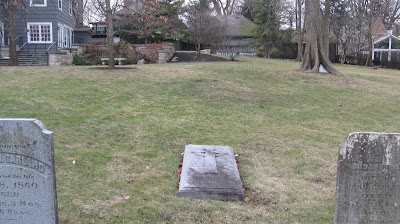
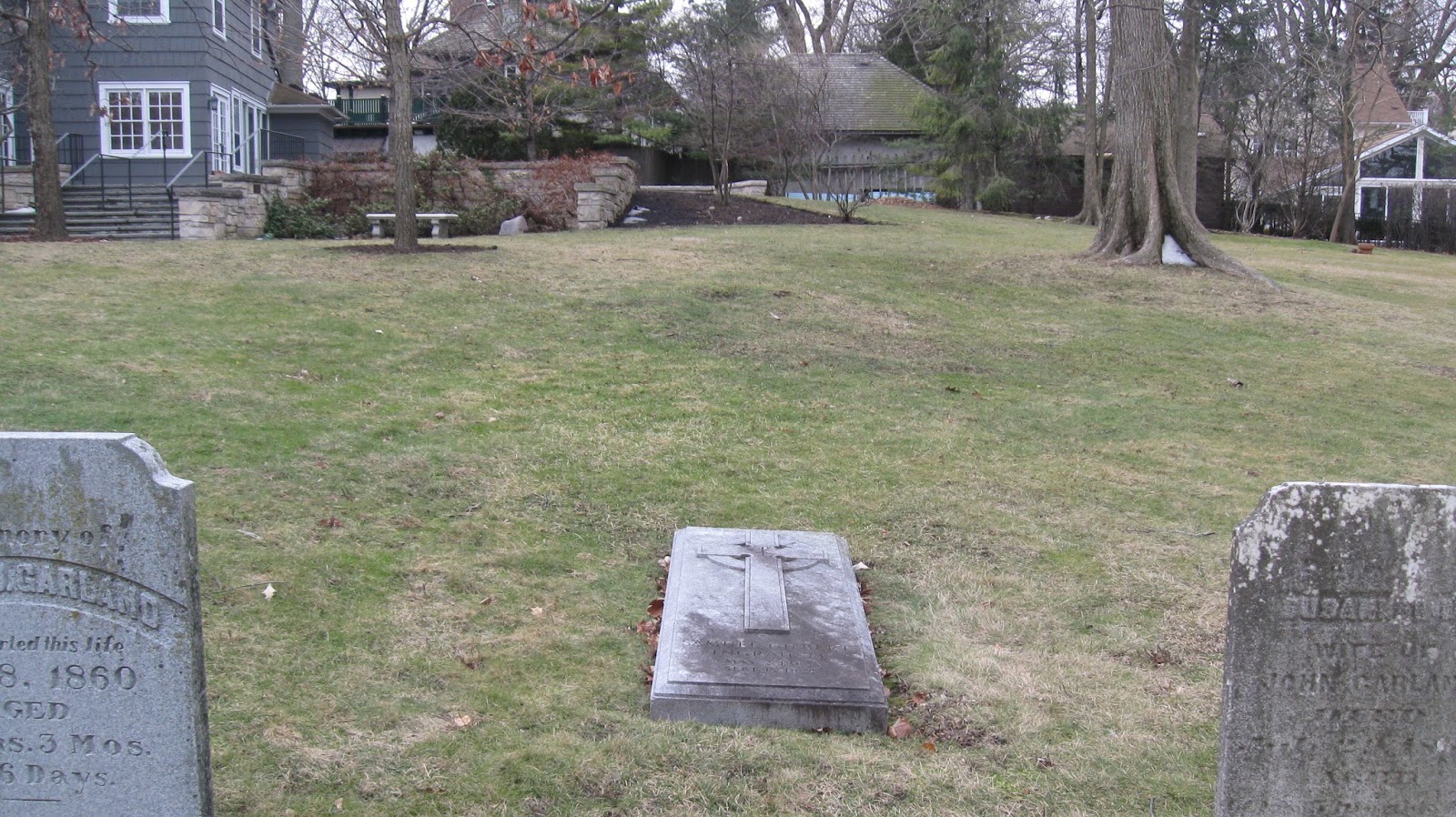
Samuel Ingraham died September 15, 1955, following a long illness. He is buried in the churchyard of Christ Church (Episcopal) in Winnetka. Not in their renowned cremation gardens but in the oldest part of the cemetery which featured in-ground burials:



Louise Paullin Ingraham was a member of St. Matthew's Episcopal Church and the Evanston Daughters of the King, and served as a director of Canterbury House at Northwestern and on the Women's Board at Seabury-Western Theological Seminary.  She was active in the local community as a member of the Evanston Historical Society, where she once gave a lecture, and the Women's Club of Evanston.  Her community interests extended beyond Evanston as well to include membership in the Chicago Historical Society, the Mid-Western Antique Association, the Women's Republican Club of the 13th Congressional District, and the Fort Dearborn chapter of the D.A.R.

Louise Paullin Ingraham died in Lake Forest Hospital on October 18, 1990.  Here is her obituary from the Chicago Daily Tribune of October 22, 1990:


The St. Mary's chapel at St. Matthew's held special significance, because in 1950 Louise and her two sisters donated the small gothic lannon-stone chapel as a memorial to their late parents George and Mary Paullin.


Louise's obituary failed to mention that she had turned over the first shovel full of dirt for the construction of the North Shore Channel.

She is not buried at Christ Church next to her husband - she is in the Paullin family plot at Rosehill Cemetery:


The Paullin Family Plot - Rosehill Cemetery


Here is her tombstone - again nothing about her and the canal:


Louise Paullin Ingraham did not live to see it, but proponents of the canal got the last laugh.  In 1999 the North Shore Channel was named the "Monument of the Millennium" by the American Society of Civil Engineers.


Louise Paullin 1923 Passport photo

Louise Elizabeth Paullin Ingraham - who turned the first shovelfull of dirt for the North Shore Channel - may she rest in peace.

Friday, February 12, 2016

A LETTER FROM - Sherman Levine

On November 8, 2013, I told the story of young Sherman Levine, who was a military weatherman at Hickam Air Force Base in Hawaii and was killed in the Japanese attack on Pearl Harbor on December 7, 1941.  If you haven't had a chance to read it, go back and take a look:

http://undereverytombstone.blogspot.com/2013/11/he-died-on-december-7-1941-sherman.html

Sherman Levine's story moved me deeply.  After doing the research and writing the article, I felt like I knew Sherman Levine.  Whenever I watch any documentaries about December 7, 1941, or the movie 'Pearl Harbor' I think about him and wonder where he was in relation to whatever they are showing on the screen.  I received a lot of positive comments about the story and I even heard from Debbie Craig (no relation) whose mother Shirley is the one whose yearbook photos and inscription I had used in my story.


On New Years Day of this year I was contacted by Blair Magida Waddick. Here's what her email had to say:

Dear Mr. Craig--

I read, with great interest, about your research on weather military personnel during WWII.  My parents, Esther and Gil Magida, were very good friends of Sherman Levine.  Mom lived across the street from him at 4915 Monticello and he and Dad were on many sports teams together while at Von (baseball, basketball, lettermen, etc.)  On a visit to Hawaii, they tried to find his grave, not knowing that he was buried at Westlawn, a cemetery we visited often.  I have a letter from him I found in Mom's scrapbook that he wrote while at Hickam Field.  If you would like a copy of this letter, please let me know.  Regards, Blair Magida Waddick 


Blair's father Gil Magida had passed away on July 20, 2004, and like Sherman is buried at Westlawn Cemetery in Norridge.  Did I want a copy of Sherman Levine's letter to his buddy back home?  You bet I did!

So, thanks to the generosity of Blair Magida Waddick, here is Sherman Levine's letter dated May 15, 1941, just 207 days before his tragic death:


May 15, 1941
Dear Character;

Just received your interesting letter and enjoyed reading it very much.  I was very much surprised to hear that you and Esther are sending me a package and even though I haven't yet received it I just want to take this opportunity to say thanks a million.  You see, it takes a little longer for a package to reach here than a letter.  Very nice of you to think of me in that respect, and I really appreciate it.  Well Gil, so you're studying for your exams eh?  Well you're not the only one.  Right now I'm up to my neck in that very same thing.  Yeah, I really am surprising myself, the way I have been studying lately.  As you know I'm learning all about meteorology and it's very interesting even though it is tough.  I work up in the weather station taking observations or rather learning how, and I'm on 8 hours and off 32.  It's a pretty soft life right now.  I went down to the beach a few days ago and some fella down there had a pair of those rubber fins that you attach to your feet and boy oh boy, I could really go with them. Otto Jaretz, and Adolph Kiefer are in town for a swimming meet but I couldn't get to see them, because no one is allowed to leave the field due to an "alert" being in effect, which means that it is sort of a rehearsal in case of an attack; with a black-out and all the trimmings.  I'm sending you a picture, I thought you might like to have it.  So now you drive Esther's father's car eh?  Boy, I certainly could go for a nice girl in a nice car.  Pretty soon everybody will (be) going on picnics + beach parties, right?  Why don't you stay in the city this summer?  You always go away to camp, and there is plenty of fun if you'd stay and go on dates and etc. in town.  But then again going to camp is pretty nice too, so I guess you better do what you think you will enjoy best.  Speaking about a full moon Gil, there is one here every night, no fooling.  But what good is the moon if there isn't a little "scenery" to go with it?  Have you been to this joint called "Michael Todd's" yet?  Well, time is going pretty fast now, and this place is beginning to look a whole lot better.  But, I'm always thinking about the day when I will walk down Monticello Ave. again and then just before I go upstairs to my house, I'll yell across the street "Hey Gil I'm back."  And I think I'm pretty safe in thinking you'll be there, at Esther's house.  Well, say hello to Esther, and your family + "Herb" and all the rest of the mob.  I ought to have your package in a few days, and thanks alot.  Aloha, Sherm June '40 (sic).  

Here's the letter in Sherman's own handwriting and a copy of the envelope it came in:


And here's the photo he enclosed with the letter:


It's a great letter from a great guy.  He misses home, and all his friends, and looks forward to the day that he will return.  He knows he's in a tropical paradise, but what good is it if all your friends are thousands of miles away?

When I got to the part of the letter that says

"I'm always thinking about the day when I will walk down Monticello Ave. again and then just before I go upstairs to my house, I'll yell across the street "Hey Gil I'm back."  

it makes me very sad, because as we know, fate had a  different ending for the story of Sherman Levine.  He never walked down Monticello Avenue again, and when he finally did come back to Chicago in 1947 he came back in a flag-draped pine box. 

Before we say goodbye to Sherman Levine once more, let's take a look at what happened to the rest of the people mentioned in his letter.

We'll start with Gil and Esther.  "Gil" was Gilbert Asher Magida.  He was born in Chicago on June 15, 1922 and died on July 20, 2004.  "Esther" was Esther Harriet Rabinowitz.  She was born in Chicago on November 24, 1922 and died on December 5, 2005.  Gil and Esther were married in 1943.


Esther and Gil Magida

Here's what Blair had to say about her parents:

After high school and some college, he and Mom eloped since he got his draft notice.  He was pretty upset when he was 4F because he was blind in one eye.  So, he continued at  Northwestern and then USC to get his BS and MS in Education.  He and Mom had fifty cents a day for meals while in LA. They lived in one room.  Mom typed his thesis and worked in the USC library and Dad worked for the local park district and went to school full-time.  While in California, he and a bunch of his friends from Von Steuben played basketball in an adult league, just as they did as kids in high school.

Coming back to Chicago, Dad was hired in River Forest as a grade school gym teacher.  Yeah, most of my friends laugh at that, too, since, no, he wasn’t an MD or lawyer or own a company.  But Dad wasn’t just a teacher.  Case in point:  one day I was buying a coat and when I gave the salesperson my credit card with both maiden and last names, she asked me if I was related to Dad and then she told me her story.  Her family moved to River Forest when she was in second grade and now she was the new girl no one befriended.  The kids were really mean. So Dad found out about it and one day when she was not at school, Dad spent much of the class talking about being a “good citizen” (remember that term?!) and kind to everyone.  She said when she came back to class, the kids were totally different.  She stayed in River Forest only one year, and I met her some 30 years later.  But she told me she will never forget how special he was and how he acted on her behalf.  

Dad did this all the time.  His kids knew about being a good sport and a gracious winner. They were taught respect.  Everyone who wanted to, played in every game or activity.  And after he took human anatomy class, he never again let his kids hit the soccer ball with their heads—in the 50’s.

Growing up in Oak Park, I found out that both Mom and Dad were members of what was then called The Hemlock Society and actively fought for fair housing in our lily-white suburb.  And everywhere they lived, they were active in synagogue life.


When Sherm talks about “camp”, it’s Camp Interlaken for Boys (Jewish—but not required-- and private) which was in Eagle River, Wisconsin. Dad’s Uncle Herb Magida was an owner and later Dad owned the camp with Joe Kupcinet, (the brother of famous columnist Irv Kupcinet), at the camp every summer, working his way up from camper to counselor to Camp Director.  He later became part-owner of a girls’ camp which I attended.


Leaving River Forest after more than 40 years, he was hired by Park Ridge schools as Curriculum Supervisor where he hired and trained teachers, etc.  He was also on school boards, (bringing a different perspective), taught college courses for several universities, wrote articles for professional educational journals, was active for local political candidates, and donated his services to the Village of Lincolnwood, where they lived, for all kinds of Village-sponsored activities.  And there’s lots more, but you get the idea.


Dad was a true gentleman, always believed in fairness, had an outstanding sense of humor, believed in the goodness of man and thought all deals should be sealed not with lawyers, but a handshake. Mom was one of the smartest people I’ve ever known.  In one class at USC, a prof encouraged her to go to law school, saying he’d pay for all her books (in 1943).  She was kind, very funny, and devoted to us.  I was raised with love and support, and encouraged to pursue any profession, and not just girlie-ones.  Mom and Dad were joined-at-the-hip, totally devoted to each other from the time they were 14.  It was an amazing love affair and it lasted over 60 years.


I won the Parent Lottery and no one is luckier than me.


Gil and Esther Magida

Gil and Esther were blessed with three children: Blair, Paul and Stephen. They never forgot their friend Sherman Levine from Monticello Avenue. On a trip to Hawaii they tried to find his grave but could not because unbeknownst to them he was buried back in Norridge, Illinois at Westlawn Cemetery, where Gil and Esther are now buried as well.

Otto Carl Jaretz, Jr. was born February 12, 1922 in Chicago.  In August of 1929 when he was only seven years old he was almost killed when his aunt Emily Strahamer committed suicide by opening all the gas jets in her kitchen.  Just as Otto and his uncle were climbing into the house through a window to try to save Mrs. Strahamer, the gas ignited and Otto and his uncle were badly burned.  As Sherman mentioned in his letter, Otto Jaretz was a competitive swimmer.  He held U.S. records in the 200-, 220- and 100-yard freestyle in the late 1930s and early 1940s. He was also a member of four national record-setting relay teams, won six AAU individual and six AAU relay titles and was on a world record-setting relay team in 1938.  Otto enlisted in the military in 1942.  Otto Jaretz died on March 14, 2006.  He was survived by his wife Lorraine and one daughter.


Otto Jaretz - 1939

The other friend Sherman mentioned in his letter, Adolph Kiefer, was also a competitive swimmer. Adolph Gustav Kiefer was born in Chicago on June 27, 1918.  He had his first swimming experience after a near fatal fall into a Chicago drainage canal.  He accidentally fell into the ice-cold water, but rather than panic, young Adolph simply rolled onto his back and began to kick his feet until he reached dry ground.  Falling into the canal prompted Adolph to learn how to swim and, with the encouragement of his father, he devoted his life to becoming the best swimmer in the world.  As a youth Kiefer swam every day for hours on end, and by the age of 16 he became the first person in the world to break the one-minute mark in the 100-yard backstroke.  This monumental record would stand unbeaten for another 15 years.


Adolph Kiefer

Adolph Kiefer's unrelenting passion for swimming, and his steadfast determination, paved the way for an historic swimming career filled with countless accolades and accomplishments.  Adolph's crowning achievement came in 1936, when he won a gold medal in the 100-meter backstroke event at the Berlin Olympics.


Adolph Kiefer at the 1936 Olympics

In the late summer of 1942, at 23 years of age, Adolph entered the Navy as a Chief Athletics Specialist in the Physical Fitness/Swimming Division.  Kiefer was immediately alarmed by the inadequacy of the Navy's Swim Training program.  Shockingly, Kiefer soon realized that several high-ranking Officers didn't even know how to swim, and the Navy was actually losing more lives to drowning than bullets.  Consequently, Adolph designed and implemented a comprehensive swim training program for 2 million recruits on 6 different bases.  According to Adolph, "The biggest thrill of my life was having people tell me that I saved their life by teaching them the 'victory' backstroke".

Inspired by his work in the Navy, Adolph Kiefer established Adolph Kiefer & Associates in 1947. Soon after establishing Kiefer & Associates, Adolph began working on several new revolutionary innovations that would change the sport of swimming forever.  By 1948, Kiefer had developed the world's first nylon swimsuit.  Around the same time Adolph invented the kickboard, which has helped a countless number of individuals learn how to swim.  In the mid 1950s Kiefer introduced the world's first turbulence resistant racing lane.  He was also the first person in the world to distribute the soft molded swim goggle gasket.  Kiefer reinvented several other swim safety devices over the years, and his company continues to be at the forefront of swimming innovation.

As of this writing (February, 2016) Adolph Kiefer is still living, and still swimming every day.

So thank you to Blair Magida Waddick for sharing Sherman Levine's letter to her father.  Thanks to her also for giving us the "story behind the story."  When I relate these stories on my blog I am limited to reporting whatever information I can glean from the Internet or other sources.  That's what makes it so nice when someone wants to fill me in on the human side of the stories that goes beyond facts and dates.

Sherman Levine and his friends:  Gil and Esther Magida, Otto Jaretz and Adolph Kiefer - just a great bunch.  They come from what is called "The Greatest Generation" because they were.  May Adolph Kiefer continue to enjoy long life and good health and may Sherman, Gil, Esther and Otto rest in peace.    

Friday, January 29, 2016

THE MITCHELL CHOIRBOYS - Bob Mitchell

This past December I watched the movie 'The Bishop's Wife' straight through from beginning to end for the first time.  Most of you have probably seen it (and if you haven't, you should).  David Niven plays a bishop trying to raise money to build a magnificent cathedral for his flock with mixed results.  Loretta Young plays the bishop's wife.  Niven's prayers are answered when he is sent an angel (Cary Grant) named Dudley to help him along the way.  It is a cute movie with good actors and a happy ending.  And who wouldn't like an angel to help them with life's difficulties?

In one of the scenes they are trying to put together a boy's choir to sing for the Christmas services.  At the beginning there are only one or two scruffy-looking boys trying hard to sing.  Then Dudley the angel arrives and each time he waves his arms, more and more boys come in to fill the seats.  Finally all the seats are filled with boys singing beautifully and they have their choir for Christmas.  In the credits it states that the choir was cast with members of the Mitchell Boychoir.  This, of course, is the internationally famous boy's choir founded by Bob Mitchell.   I want to tell you the story of my friend Bob Mitchell and how he dedicated his life to music.  (and no, I never sang in his choir - I can't carry a tune in a paper bag). 

How did I get to meet and become friends Bob Mitchell?  Bob used to tell stories and play the piano as part of the Rudolph Valentino Memorial Service held each year on August 23rd, the anniversary of Valentino's death.  The service is held in the mausoleum at Hollywood Forever Cemetery (formerly Hollywood Memorial Park Cemetery).  In later years Mitchell also played the accompaniment for the Valentino film shown on the evening of the 23rd - projected on the outside wall of the mausoleum.  The first few years I attended the service, Bob brought several boys with him who sang for the service, but toward the end Bob came by himself.  So let's see what we can find out about Bob Mitchell and his choir.

Robert Bostwick ("Bob") Mitchell was born October 12, 1912 in Sierra Madre, California to Robert E. Mitchell (1869-1933) and his wife Florence nee Bostwick (1887-1938).  Bob was an only child.  

Bob's father Robert E. Mitchell had been born in Fort Benton, Montana - he was an attorney by trade.  

Florence Bostwick Mitchell had been born in Colorado.  Florence's father Levi Bostwick and his wife Adeline had been among the pioneer families of Sierra Madre, California.


A very young Bob Mitchell with his mother

Every year during the Valentino service, Bob would relate stories of his childhood and strict upbringing.  Mitchell was the first one to say that he had no natural music talent at all.  By his own account, he came by his formidable skill as a musician with 99% perspiration and 1% inspiration.  Indeed, he pointed out, a large part of the perspiration was extracted by his mother and her switch. He began his intensive study of piano at age four, where he spent hours upon hours learning every verse of every hymn in the Episcopal Hymnal.  

“Whenever she switched me, I knew I probably deserved it,” said Mitchell, “and I am so thankful to my mother for doing that for me.”  She was pious, prim and very strict with young Mitchell, but gave him the gift that has served him all his life—the joy of music.

The 1920 US Census finds the Mitchell family at 48 W. Alegria Avenue, Sierra Madre, Pasadena Township, California.


48 W. Alegria Avenue, Sierra Madre, CA
 
At age 10, tall and mature for his age, Mitchell’s mother decided it was time for him to learn the organ so he could continue his studies of  the traditional music of the Episcopal Church. The only organ in Sierra Madre, where he grew up, was at the local parish. He and his mother met the pastor, whom he described as a “very stuffy” Englishman, to inquire if young Mitchell could practice on the church’s organ.

“No, no, no, no one may play the organ in the church, but our own organist,” Mitchell comically mimicked the condescending pastor’s English accent. His mother’s reply was as sharp and quick as her switch…“Well, a man of the cloth that would not allow a child to learn an instrument used to praise almighty God!” The pastor quickly reversed his position. "Well I suppose we must make an exception in this case,” Mitchell mimicked the pastor, “but without setting any precedents…”

Like other young people of that era, Bob Mitchell and his friends wanted to see all the latest movies.   In 1921 when he was nine years old, he asked permission to see Rudolph Valentino in 'The Sheik.'  His mother promptly forbade it.  Mitchell told us how all the mothers hated the Valentino craze because their sons were slicking back their hair with Vaseline, and it was almost impossible for them to wash the grease out of their sons' pillow-cases.

As the movies became more and more popular Bob's desire to see them grew as well. One day he came up with a plan.  Much to his delight, the organ played an integral part in this new form of entertainment. “(So) I told my mother, there’s a pipe organ [at the movie theater] and I really want to play it!”  Despite her misgivings (she considered the movies "cheap and vulgar"), his mother took 12-year-old Robert down to the Strand Theater on Colorado Boulevard in Pasadena where he was soon employed  to play Christmas carols between showings of films. On Christmas Day 1924, Mitchell was playing carols on the organ when the lights went down and a movie about the Yukon went up.  The 12-year-old kept playing, improvising a soundtrack.  Soon he was accompanying matinee shows five times a week. 

Here is a photo of thirteen year old Bob playing the organ the family had installed in their home in Sierra Madre:


Every year at the Valentino Memorial Service Bob would regale us with stories of the Valentino films he had seen while playing as an accompanist.  Bob had even seen 'A Sainted Devil' - a Valentino film presumed "lost" today.  He delightedly told us about not only seeing Rudolph Valentino on the screen while he was playing the accompaniment, but all the major stars of the silent era. 

With the arrival of talkies and Al Jolson in the 1927 film 'The Jazz Singer,' Mitchell's first silent-movie career ended when he was 16.  "My father said, 'I see they are going to have sound' " in the movies, Mitchell told CBS News in 2005. "And I said, 'Oh, that will never catch on.'. . . . But, of course, it ended the (need for an) organist right away."

During this period Bob expanded his musical horizons by singing in the St. Matthias boy's and men's choir.  After the talkies took away his theater organ job, Bob played pipe organs in churches, also training choirboys.  In 1930, at the age of eighteen, Mitchell was the youngest to be named "Fellow of the American Guild of Organists", (F.A.G.O.), the highest degree awarded organists in the United States by regular examination.

The 1930 US Census shows the Mitchell family living at 2425 Ninth Avenue in Los Angeles. 


2425 Ninth Avenue, Los Angeles

Bob's father reported that he was a lawyer for General Foods, and Bob reported his occupation as "Episcopal Church Choirmaster."

In 1932 Bob studied at the Eastman School of Music in Rochester, New York on a piano scholarship.  In 1933, he moved to New York City where he continued his study with a scholarship at the New York College of Music.  During this time he was also a substitute organist in churches, played the piano and sang on radio station WNYC, and did nightly stints at Joe's Chateau, a popular speakeasy in Manhattan to supplement his income.

Bob's father had died in 1933, at the age of sixty four.  After his father's death, Bob decided to return to Los Angeles to look after his mother.  Bob was an only-child, so all of the responsibility for his mother fell on his shoulders.  He and his mother decided to sell their house on Ninth Avenue, and bought a house at 149 N. Gramercy Place in Los Angeles.  


149 N. Gramercy Place, Los Angeles

When you compare the two houses, you'll see why they did what they did.  The house on 9th Avenue is approx. 2,282 square feet.  It has 3 bedrooms, but only one bathroom.  The house on Gramercy is slightly smaller overall at approx. 2,428 square feet.  It has four bedrooms but it also has three full bathrooms. Rooms for rent are much more attractive if the landlord can offer each roomer their own private bathroom.  Let's face it, nobody likes to share a bathroom.  Jobs in music are not known for paying high salaries, so Bob and his mother decided that by buying a house where rooms could be rented, they could supplement Bob's income with the rental income from the rooms if need be.  Remember, this was the era before Social Security, so Bob's mother had to rely solely on the money Bob's father left her after he died.        

In 1934, Bob founded "The Mitchell Choirboys." The choir would ultimately appear in over one hundred motion picture performances.  In addition to films, the choir also performed in thousands of radio and television broadcasts. 

Bob's beloved mother died in 1938 at the age of fifty-one.  So by the time of the 1940 US Census, Bob was by  himself.  As stated above, he was living at 149 N. Gramercy Place in Los Angeles.  Bob had a housekeeper, sixty-one year old Edna Davis, and he was renting out two rooms to help supplement his income.  His tenants were twenty-two year old David Street, a musician with a dance orchestra, and twenty-eight year old Elon Bixby, a teacher in a "Private School."  Interestingly, all three, Edna, David and Elon told the census taker that they had been living at that same address in 1935.

On December 6, 1941, the day before Pearl Harbor, Warner Brothers released 'Forty Boys and a Song' as part of their Music Masters series. The ten minute short follows Bob and the boys through a usual day of musical instruction in the morning and regular classes and recreation the rest of the time. 'Forty Boys and a Song' was nominated for an Academy Award in the Best Short Subject - One Reel category.

Then, as we all know, World War II intervened.  Bob did a tour of duty in the Pacific with the Naval Reserve.  Here's a photo of Bob taken at that time:


Bob Mitchell, USNR

During Bob's time in the military he managed to use his musical skills. He played keyboards for the Armed Forces Radio Orchestra under the direction of Meredith Willson.  Here he is playing the organ for the Armed Forces Radio Service:


After the war, Bob returned to the music scene in Los Angeles as a very busy musician, and with his choir, and even found the time to be an honor student at Cal State L.A., receiving a Bachelor of Arts Degree in Music Education.

Mitchell was staff pianist-organist on Los Angeles stations KMTR, KEHE, KHJ, and KFI-KECA. He either appeared or played the organ for such early TV shows as "Ladies' Day", "Parlor Party", "Engineer Bill", "The Jack LaLanne Show", and "Art Linkletter's House Party."

In December of 1949 Bob was honored with an episode of Ralph Edwards' "This Is Your Life," recognizing Bob's contributions to music.

In 1954 Bob Mitchell decided to establish his own school for his choirboys, employing one full-time accredited teacher.  The boys received four hours of academic instruction and three hours of musical instruction daily.  Mitchell modeled the academic training on his own experience as a student at the Pasadena School of Tutoring.  There, headmaster George Arthur Mortimer accepted students of any age and work was adapted to individual needs.  At Mitchell’s school, even after the teacher’s salary and other expenses were deducted from the choir’s earnings, each boy netted around $550 per year. Ironically, the rise in union scale wages throughout the 1940s and into the 1950s resulted in a gradual decline in the choir’s size from thirty-three to eight members. (Mitchell recalls that this was dependent on recording and traveling factors only; usually the group consisted of around thirty boys.) By the mid-1950s, when film and radio producers began to request as few as six boys, Mitchell set a minimum call of eight; six, he felt, was too few to create the proper blend of voices.

Through the years, Bob and his choir did two European tours, and one around-the-world tour.  The Mitchell Choirboys gave two command performances in St. Peter's Basilica in Rome - one for Pope Pius XII in 1957 and one for Pope John XXIII in 1959.

In 1962, when the new baseball stadium at Chavez Ravine opened for all the Dodger and Angel games, he was chosen as organist - making him the only 'player' in baseball ever to play for both major leagues at the same time.

In the 1980s Bob was asked to appear at the Valentino Memorial Services by his friend Bud Testa who hosted the services during that era.

In later years, Mitchell was called to play organ accompaniments at the Silent Movie Theater in Hollywood, where (even at 90) he was heard several times a month.  Because he began pipe organ so young, it is possible that he was the last living active theater organist.

Bob Mitchell had hob-nobbed with princes and popes, but he did not let in change him.  He always minimized his talent or credited it to hard work, but Bob's talent was truly great - and like most truly great men his humility shone through.  When he looked at you with those piercing eyes you felt like he was truly interested in what you had to say.  And one of the signs of his great talent - whether he was playing for the Valentino Service or a film at the Silent Movie Theater, he never used a piece of sheet music - he just played.  

In the twilight of his life, Bob could afford to look back at all he had accomplished.  He outlived fifty of his choirboys but was contacted daily by many of his living alumni.  In the 1990s things were much more open then they had been years ago, so a newspaper reporter finally asked the question many had wondered about.  When the reporter asked the never-married Bob if he was gay, his eyes twinkled as he replied, "My dear, I'm as gay as a garden party," but went on to say that he always looked each of his choirboys directly in the eyes, and never "southward" - and there was never a hint of scandal about either Bob Mitchell or his choir.

Bob Mitchell slipped away to direct the Heavenly Choir on the afternoon of July 4, 2009.  He was just short of his ninety-seventh birthday.  Bob is interred at the Hollywood Forever Cemetery:


I haven't been to Hollywood recently, but the next time I am there, one of the first places I will go will be to the crypt of Bob Mitchell.


Bob Mitchell - musician extraordinaire - may he rest in peace.


Besides the aforementioned 'Forty Boys and a Song' (Warner Bros.), his other screen appearances include 'The Demi-bride' (MGM),  'College Scandal' (Paramount), 'Blondie in Society' (Columbia),  'The Thorn Birds' (Feature for Television),  and 'All Night Long'  (Universal).

Honors

Just some of Bob's many awards and honors include:


Member of the Study of a Thousand Gifted California Children by Dr. Lewis Terman of Stanford University.

Silver Medal personally awarded at the Royal Palace in Monte Carlo by Prince Ranier and Princess Grace of Monaco.

Silver Beaver Medal, the highest honor awarded scoutmasters by the Boy Scouts of America.

Acclaimed a Knight of Malta with a medal from the American Melkite Archimandrite.

Honorary Tile Plaque in the Amphitheater of Temple Ahavat Shalom, Northridge, California.

Received the "Pro Papa et Ecclesia" Certificate from Pope John-Paul II.

Friday, January 15, 2016

TWO DIFFERENT NEWSPAPERS REPORT THE SAME STORY: Arthur and Walter Butler

On August 19, 1895, two brothers, Arthur and Walter Butler of Evanston, Illinois drowned in Lake Michigan.  The tragedy was, of course reported by the Chicago newspapers.  In this article I am going to take a look at how the incident was reported by two of the major Chicago daily newspapers of the time:  The Chicago Daily Tribune and The Chicago Inter-Ocean (I have always loved that name for a newspaper).  It is amazing how differently the newspapers reported the story. 

First, we will look at the story as reported by the Chicago Daily Tribune on August 20, 1895:


FOUR ARE DROWNED
Two Boys, a Man and a Girl Perish in Lake Michigan.
Victims of the Accidents Were Swimming - Arthur and Walter Butler, Brothers, Lose Their Lives at Evanston - Florence Millard of Highland Park is Carried Down by the Undertow - Thomas Walsh, a Laborer, Drowns on the South Side in the Presence of Many.

Four persons were drowned in Lake Michigan yesterday.  Two boys, a young girl, and a man were victims of the accidents.

The Dead.

BUTLER, Arthur H., 19 years old, No. 944 Sherman avenue, Evanston.
BUTLER, Walter, 17 years old, No. 944 Sherman avenue, Evanston.
MILLARD, Florence, 13 years old,  Highland Park.
WALSH, Thomas, 35 years old, No. 3145 S. Canal street.

Arthur H. and Walter Butler, brothers, were drowned at Evanston.  The boys had gone in swimming.  Walter was carried beyond his depth by the undercurrent and Arthur went in to save him and both went down together.  Their bodies were discovered two hours later.

The boys were sons of Joseph H. Butler, No. 944 Sherman avenue, and clerked in their father’s grocery store in Main street, South Evanston.  Hundreds of people lined the shore while the search for the bodies was going on.  An inquest will be held at Palmer’s morgue, Chicago avenue, this morning, where the bodies were taken. 

A younger brother accompanied the Butler boys to the lake and remained on shore while they went in swimming.  As soon as he realized his brothers were drowning he jumped into the delivery wagon in which they had gone to the lake and drove at breakneck speed for the South Evanston Police Station.  Policeman Johnson saw the wagon coming.  Thinking it was a runaway he ran out and stopped it.  

The frightened boy told him breathlessly that his two brothers were drowning and the policeman got in and drove to the lake.  The life-saving station was notified and the members of the crew hastened to the rescue on their bicycles.  A systematic search was begun, the men taking hold of hands and wading back and forth through the water.

At 1:50 Walter Butler was found 250 feet south of where the accident occurred.  Although he had been in the water oven an hour Capt. Lawson and his crew went hard to work to resuscitate the young man.  They had been at work half an hour when Dr. Kauffman arrived and pronounced him dead.

An hour after the recovery of the first body Benjamin Spencer, No. 1031 Judson avenue, found Arthur’s body 500 feet south of where he had been drowned.

The Tribune article went on to report the circumstances of the drowning of Florence Millard and Thomas Walsh, but for purposes of this article, we will just look at the Butlers.

The loss of the Butler brothers was a terrible tragedy to be sure – one brother drowned trying to save another brother who also drowned. 

Before we take a look at this same incident as reported by the Chicago Inter-Ocean, let’s see what we can find out about the Butler family of South Evanston, Illinois:

The boys' father was Joseph H. Butler (1843-1911), as mentioned in the article.  Joseph Harris Butler was born July 17, 1843 in Kingston, Surrey, England to John Butler (1812-1886), and Mary, nee Harris (1812-1892).  Joseph Butler came to the US in 1865.

The boys’ mother was Annie, nee Woodman (1844-1923), born September 2, 1844 in Devonshire, England.  She came to the US in 1858.  

Somewhere along the way Joseph Butler met Annie Woodman and they were married in 1866.  In addition to the three boys mentioned in the article, the Butlers were also parents to five daughters.  Here is the lineup of the Butler children:

Emily M. Butler                 1868-1945
Anna May Butler               1869-1947
Alice M. Butler                  1872-1917
Arthur H. Butler                 1876-1895
Walter J. Butler                  1877-1895
Ralph W. Butler                 1879-????
Bertha Elizabeth Butler      1882-????
Caroline Eva Butler            1885-1930

All of the Butler children were born in Illinois, except Annie, who was born in London, Ontario, Canada.  History does not explain how this came to be.

The first US Census after Joseph and Anna’s marriage in 1866 was the 1870 US Census.  The Butler family was living in Chicago’s Thirteenth Ward.  They reported twenty seven year old Joseph as a “Clerk in a Grocery Warehouse," twenty three year old Anna was “Keeping House,” and their children: two year old Emily, and one year old Annie.  Living with them was twenty five year old William Butler, twenty three year old Elizabeth Butler, and fourteen year old Charles Walduck.

By the 1880 US Census, the Butlers were living in the Village of South Evanston, Illinois.  Joseph was a “Salesman”, Anna was still “Keeping House” and by now the children were Annie, Alice, Arthur, Walter, and six month old Ralph who was referred to as “Baby Butler.”

The 1890 Census for Evanston is unfortunately lost, however we do have Evanston City Directories from that era, and the directories mirror the growth and changes as South Evanston, and then the City of Evanston grows and matures.  Here is how the directories list the Butler grocery business and the Butler family home from 1882-1895:

1882  (Village of South Evanston)
Grocer:  Lincoln Av., SWC Railroad Tracks
Residence:  ES Chicago Av., S. of Lincoln Av.

1883  (Village of South Evanston)
Grocer:  Lincoln Av., W of Chicago Av.
Residence:  ES Chicago Av., S. of Lincoln Av.

1884  (Village of South Evanston)
Grocer:  SS Lincoln Av., W. of Chicago Av.
Residence:  ES Chicago Av., 2d S. of Lincoln Av.

1886  (Village of South Evanston)
Grocer:  Ducat Block
Residence:  Benson Av., SWC Lee

1888  (Village of South Evanston)
Grocer:  Lincoln AV. NWC Railroad Av.
Residence:  Benson Av., SWC Lee

1889  (Village of South Evanston)
Grocer:  Lincoln av., NWC Custer Av.
Residence:  Benson Av., SWC Lee

1890  (Village of South Evanston)
Grocer:  NS Lincoln Av., 1st W. Railroad Av.
Residence:  Benson Av., SWC Lee

1891  (Village of South Evanston)
Grocer:  701 Lincoln
Residence:  300 Benson Av.

1892  (City of Evanston)
Grocer:  701 Lincoln
Residence:  300 Benson Av,

1893  (City of Evanston)
Grocer:  Evanston Av.
Residence:   300 Benson Av.

1894  (City of Evanston)
Grocer:  701 Main
Residence:  944 Benson Av.

1895  (City of Evanston)
Grocer:  701 Main
Residence:  944 Sherman Av.  (This is actually a mistake - Benson Avenue was changed to Elmwood, not Sherman).   Later directories correct this error).

That brings us to that fateful day of Monday, August 19, 1895.  The weather forecast was typical for a Chicago day in August: clear and windy, 85 degrees.  A perfect day for swimming in Lake Michigan.

Here's the Chicago Inter-Ocean's description of what happened to  the Butler brothers:


DIED IN EACH OTHER'S ARMS
Brothers, Venturing Too Far in the Surf, Drowned at South Evanston

Arthur Butler, aged 19 years, and Walter, his brother, aged 17 years, lost their lives yesterday afternoon in Lake Michigan, off the shore of South Evanston.  The tragedy occurred in the presence of Raelbe (sic) Butler, a third brother, two years younger than Walter.

The three boys, who are the sons of J.H. Butler, a grocer doing business on Main street, South Evanston, had driven in their father's delivery wagon to the lake shore.  When the party reached the foot of Rinn street the boys alighted and commenced trying to see how near they could venture to the waves, which were rolling quite high, without getting wet.  Becoming bolder, Walter finally waded into the water, and was soon followed by his eldest brother, Arthur.  They had been out but a short time when a huge breaker approached Walter, who was the farthest from shore, knocking him off his feet.  The boy screamed for help, and Arthur, hearing his cries, made a heroic effort to rescue him.  By the time Arthur had struggled to where Walter had fallen, the latter had only sufficient consciousness to clasp his brother about the neck, and in doing so, dragged his would-be rescuer beneath the waves.


During the brief struggle, Raelbe had been sitting upon a pier close at hand.  He saw his brothers floundering in the water but was powerless to aid them.  In despair he rushed toward the shore, screaming loudly for assistance.  His cries were heard by Ben Spencer, of No. 1631 Judson street, who chanced to be in the vicinity at the time.  W.P. Kay, of the life saving crew, stationed at Evanston, also observed the boys' distress and hastened to the rescue, but by the time the men had arrived upon the scene both brothers were drowned.


Kay waded out, and after some trouble, succeeded in recovering the body of Walter, and Spencer looked after that of the other young man.  The remains were conveyed to C.W. Palmer's undertaking room, and Raelbe carried the sad intelligence to his parents.


It was the same story, but it was reported vastly different by the two major newspapers. 

Later that week the newspapers reported that the Coroner's Jury brought in a verdict of accidental death and recommended that the police station at South Evanston be supplied with a life-saving outfit.

After the Coroner's jury had reached their verdict the bodies of the two Butler brothers were released for burial.

Arthur and Walter Butler were buried in an unmarked grave in Section 119 of Rosehill Cemetery in Chicago.  It is a large plot but the only grave in the plot to be marked is that of their sister, Alice Butler Newman.
  

The boys' father, Joseph Butler died in Evanston on November 5, 1911 at the age of sixty eight.  Their mother, Annie Woodman Butler followed him on November 14, 1923.  She was seventy nine years old.  They are both buried in unmarked graves next to their sons in Section 112 of Rosehill Cemetery.  

So now you know the story of Arthur and Walter Butler who lost their lives in Lake Michigan on a warm sunny day in August of 1895.  They may have been all but forgotten, and even lie in an unmarked grave but despite that, we remember them here.  

Arthur and Walter Butler - may they rest in peace.