Friday, April 19, 2013

EVANSTON PHOTOGRAPHER DE LUXE FOR THE NORTH SHORE - J.D. Toloff

In my genealogy research I often came upon the name of a noted Evanston photographer named J.D. Toloff.  Since he keeps popping up I thought it might me interesting to see what I could find out about the man who recorded so much personal history from my home town.

Joseph David Toloff was born April 24, 1888 in Grodno, Lithuania. Grodno was one of those cities that, although it stayed in the same place, the country it belonged to kept changing.  Sometimes it was in Poland, sometimes in Russia; today Grodno is a major city in Belarus. When J.D. Toloff was born, approx. 1/2 of the 50,000 population of Grodno were Jewish, as was Toloff.

The family name was originally "TOŁOCZKO" but there is no Ł in Latin/French/English so Toloczko. As a Russian citizen his family name in Russian must have been "ТОЛОЧКО".

In 1908 when Joseph was nineteen he emigrated to the United States. The 1910 Census shows him in Philadelphia having already taken up his craft of photography.  He said his occupation was photographer in a "Picture Parlor".  His native tongue was Yiddish, but he was also fluent in English.  He was living as a boarder at 410 South Ninth Street, in Philadelphia.  He said years later that his big break came when he began working for "Mr. Goldensky of Philadelphia who is without question one of the most able and versatile  photographers in America."

J.D. Toloff came to Evanston, Illinois in 1913.  Some of his early work there stirred up controversy as evidenced by this article from Abel's Photographic Weekly from October 31, 1914:


Apparently Toloff believed that there was no such thing as bad publicity.

By the time Toloff registered for the Draft on June 5, 1917 he was both living and working in Evanston. He was living at 616 Hinman Avenue

616 Hinman Avenue, Evanston, Illinois

and his studio was at 1623 Orrington (where the State National Bank Plaza is today). 


He mentioned on his registration form that he was the sole support of both his mother and his father, but war was war, and that did not keep him out of the Service.  From the Chicago Daily Tribune of May 22, 1918:

ENLISTS
Evanston Photographer to be Enrolled in Naval Reserves.

Joseph D. Toloff, Evanston's best known photographer, has answered the call to the colors.  He has enlisted in the United States naval reserves and will be enrolled tomorrow morning.  It is rumored he will be chief instructor of a school of serial photography to be established at the Great Lakes Naval Training Station.  In addition he will conduct four government studios at the different camps where sailors may have their pictures taken at cost.

There was sad news for the Toloff family in the Chicago Daily Tribune of April 26, 1919:

LEARNS HIS FATHER DIED 2 YEARS AGO IN RUSSIA

Joseph D. Toloff, Evanston and Chicago photographer, learned yesterday that his father, David, died two years ago in Russia.

But there was happy news as well:

SNAPSHOT
Evanston Photographer to Wed Her in Love At First Sight Romance

A pair of blue eyes and a demure smile have made Joseph D. Toloff, Evanston photographer de luxe for the North Shore, the principal in a romance.

Toloff met Miss Helen Weingarten on Decoration day at Oelwein, Ia., while attending the wedding of Miss Ruth Weil, a former Northwestern co-ed.  Miss Weingarten was the maid of honor.  Now she is to be the bride.

She is the daughter of Max Weingarten of Champaign, Ill., and a graduate of the University of Illinois.  Announcement of the engagement was made at Evanston yesterday.  Lester Toloff, brother of the photographer, said Joseph had fallen in love at first sight. - Chicago Daily Tribune - June 22, 1919

Here's the rest of the story from the Bulletin of Photography magazine of February 4, 1920:

Miss Helen Weingarten and Joseph D. Toloff were married on January 27th at the Hotel La Salle, Chicago, Illinois.  After the ceremony they left for a trip to Atlantic City and New York.

Hotel La Salle, Chicago

The Toloff family was featured in the Chicago Daily Tribune of December 14, 1919 with the following story:

REUNITED
Years of Separation in War Fade as Sisters Meet Again
Sisters Parted by Years of War Reunited Here
One Comes from Poland to Make Home in Evanston

The sisters, separated by war, were tearfuilly happy in their reunion at the La Salle street station last evening. Esther of Bialystok, Poland, and Helen of Evanston, held each other in a fond embrace while the brother, Joseph D. Toloff, a photographer in the Fine Arts building, beamed upon them.

"O, dear, I'm so relieved that you're here, " said Helen in English.  "We were so worried about the bolsheviki.  Wasn't it terrible?"

"I was so afraid you didn't get my telegram and wouldn't meet the train," murmured Esther in Polish.  "Are the bolsheviki very bad in Chicago?"

Finds Fears Unfounded.

Then it developed their fears were unfounded, for neither sister had seen a Red or the manifestation of one, to the best of her knowledge.

Bialystok?  Yes, it was in a bad way.  For one thing, there was hardly any sugar and coal was so oscarce many of the industries were closed down, said Esther.  Why, the stores shut at dusk and the street lights were turned off.  And the cost of living was out of sight.

Helen stood aghast.  But the Germans?  Yes, Esther told her, the city had been occupied by the Germans for three and a half years, and it wasn't very nice.  But every inhabitant had a job and could make a living.  The worst hardships, she said, came with the invasion of the Polish army.

Says Poles Looted.

"The Polish troops started to loot houses," she declared, "and the arrival of the American Red Cross commission was all that stopped them.  There is more suffering under the Polish occupation, because the system is poor.  A pair of shoes cost 450 marks; a woman's coat, 2,000 marks, and all other wearing apparel is almost prohibitive in price."

Miss Toloff left Warsaw Nov. 22.  The war made a linguist of the young woman, who now speaks Russian, German, and Polish and hopes to learn English quickly.

The loss of her parents, who died during the war, made the period doubly trying.  Miss Toloff will reside with her sister, Mrs. E.L. Ray, at 616 Hinman avenue, Evanston.

The 1920 Census shows all of the family living at 616 Hinman. 


But dealing with the public does have its drawbacks.  The Bulletin of Photography magazine issue of April 20, 1921 carried the following story:

PRINT WRONG PICTURE - PHOTOGRAPHER SUED

Suit for $100,000 damages against Joseph D. Toloff, a prominent photographer of Evanston, Ill., was brought in the Circuit Court on April 11th, by H. Clay Beckwith, of Ravenna, Ohio, formerly of Evanston, as a result of the printing of a spurious photograph in the Chicago Tribune, Sunday April 3rd.

The case is in the nature of a libel and arises out of the action of Mr. Toloff, in giving to the Chicago Tribune a picture of H. Clay Beckwith as that of Prof. Holmes Beckwith, who killed Dr. Dean Wharton of Syracuse, New York, on April 2, and then committed suicide.  The picture of H. Clay Beckwith was printed in the Tribune under the caption "Slayer-Suicide", and in connection of a long account of the tragedy and the summary of the life of Dr. Holmes Beckwith.  This stated, among other things, that Dr. Holmes Beckwith was at one time a professor at Northwestern University at Evanston.  

The error was called to the attention of the Tribune by a friend of H. Clay Beckwith, and brief correction was made in the "Beg Your Pardon" column of the Tribune of April 4th.

The plaintiff claims the action of Mr. Toloff was either malicious or inexcusably negligent, and that by reason of the publicity has caused the plaintiff great notoriety and injury.

H. Clay Beckwith is a prominent citizen of Ravenna, Ohio, and is well known in Evanston and Chicago.  For some years he has been General Manager, Secretary and Treasurer of the John F. Byers Machine Company.  He is in no way related to Dr. Holmes Beckwith.

I could not find any further mention of the lawsuit or its outcome - perhaps they decided to settle out of court.

By 1922 the newlyweds left Hinman Avenue and moved to 1346 W. Howard in Evanston, to a building that no longer exists.

J.D. Toloff photographed everyone from the famous to the ordinary. Here's his portrait of Evanston resident and Vice President Charles Gates Dawes:


He photographed the greats from the world of dance:  Here's Ruth St. Denis from 'The Peacock':


and Ted Shawn (Ruth St. Denis and Ted Shawn were the founders of the world-famous Denishawn Dancers):


He photographed the greats from the stage:  Here are two portraits of Wanda Carlyle from 'The Tavern' (1920):


He also did weddings.  Here are two photos from the wedding of Martha Elisabeth Pape and Charles Joseph Bleidt from May 11, 1921:

Photo courtesy Amanda Pape and Bill Parker
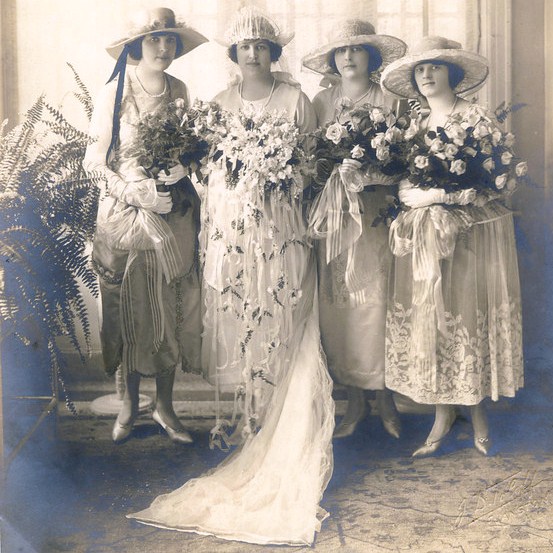
Photo courtesy Amanda Pape and Bill Parker

Toloff did portraits as well.  Here are two shots of Martha Elisabeth Pape circa 1916:

Photo courtesy Amanda Pape and Bill Parker

Photo courtesy Amanda Pape and Bill Parker

Here's a photograph that Toloff submitted to a photographic expedition in 1919 called "Girl With Black Hat":


As his reputation grew, Joseph Toloff was contacted by local schools to do their yearbook photography.  I have seen Toloff photos in the yearbooks from Roycemore School in Evanston, all the way up the North Shore to Barat College in Lake Forest, but Toloff did his most consistent work for the yearbook of Northwestern University in Evanston - "The Syllabus".  In fact, in 1922 Northwestern asked Toloff to stroll around the Evanston campus and photograph anything that he found interesting.  This resulted in a sixteen page section called "Some Campus Views".  It is with great pleasure that I present it to you here:


My favorite is the shot of the Evanston lighthouse.

Toloff always took out a full page ad in the yearbooks he worked on. Here is his ad from the 1924 Syllabus:

Ad from Northwestern University Syllabus - 1924

In 1925 Toloff decided to move his studio from Orrington Avenue in Evanston to 518 Davis Street:


Studio Light Magazine, the Eastman Kodak magazine for professional photographers from May, 1925 featured Toloff and his new studio:


In 1925 Toloff and his wife Helen moved their residence to the Sovereign Hotel in Chicago:


Ad from Northwestern University Syllabus - 1928

The Toloffs moved their residence again in 1931, this time to the Park Lane Hotel, 2842 N. Sheridan Road in Chicago:


And in 1935 the Toloffs relocated to the Hotel Pearson, Chicago


The high point in the career of Joseph Toloff came in the late 1930s when he was named a Fellow of the Royal Photographic Society of Great Britain.  From then on, he was able to list his credit as J.D. Toloff, F.R.P.S.  This is a high honor and only comes after either a direct submission, or as was likely in Toloff's case, the evaluation of his entire body of work.

In 1955, after being in business in Evanston for more than forty years, Joseph Toloff decided to retire.  His brother Lester had retired to Miami, Florida (although he died in 1952) so Joseph decided to move south and get away from the harsh Chicago winters, once and for all.  

Less than two years into his retirement, the Chicago Daily Tribune from March, 1957 carried the sad news of the death of Joseph Toloff:


Although Toloff's only living relative was still back in Evanston, he was buried in the military graveyard in Andersonville, Georgia.  Here is his interment record from the US government:


It is amazing that, after all these years, Helen Toloff Ray was still living at 616 Hinman in Evanston.  Here is a photo of Joseph Toloff's grave:

Photo courtesy Kevin Frye

It is also interesting that Joseph's sister Helen is listed as his next-of-kin.  What happened to his wife Helen?  I don't know.  After the 1940 census I can't find a trace of Helen Weingarten Toloff.

So, that's the story of noted Evanston photographer Joseph D. Toloff - a man who photographed history.  As I was working on this story I wondered what became of all of Toloff's negatives?  Can you imagine what a treasure trove that would be for a historian?  Toloff was the premier photographer of Evanston from 1913 to 1955.  Joseph and Helen had no children, so perhaps the negatives went to other relatives or, as often happened, maybe they were just thrown out.  If anyone knows what became of Toloff's negatives I would be very interested in finding out.

Joseph David Toloff - a man who probably knew more about Evanston and Evanstonians than any other person of his era.  The Evanston photographer de luxe for the North Shore - may he rest in peace.  

Special thanks to Amanda Pape and Bill Parker for allowing me to use the Toloff photos of their family for this article.  Amanda has a fascinating blog about her family that is a must-read for anyone interested in Evanston history.  You can find it at:


Thanks also to fellow Find-a-Grave photographer and graver Kevin Frye for the photo of Joseph Toloff's grave.

All other photos are from the author's collection.

NOTE:  There is alot more material available about the life and work of J.D. Toloff.  The hardest part of writing this article was to decide what to include and what to leave out.  Because Toloff and his work are so interesting, I have started another blog "Toloff Photography Evanston" that will deal with his life and work.  I will post one item each week, either from Toloff's works or about Toloff himself.  Please join me at:


Thanks to Feliks Woroszylski for his help with the original family name.

Friday, April 12, 2013

ONE OF MY FAMILY TREE DEAD ENDS: MY GREAT-GRANDMOTHER - Margaret Kelly Craig

As many of you know who are regular readers of this blog, I am of mostly Irish and German heritage. German genealogy research is very rewarding.  Once you get someone who knows the records and reads Old German, you are on your way.  The Germans were fantastic record keepers, and they kept track of everything.  I have a copy of a letter that my ancestors in Germany wrote to the authorities in the 1700s complaining that the amount of the potato crop that they had to pay in taxes was too high.     

Irish genealogy research, on the other hand, is maddening, unless you are descended from the landed gentry.  Oftentimes in days gone by, the priest was the only Catholic in the village who could read or write. Births and deaths were so commonplace that not all of them got recorded, and then, of course, there were all the records that were lost in the Dublin fire of 1922.  But most maddening of all is the naming the Irish used and reused and used again.  I know all about the Irish naming conventions, but what about the names beyond those?  Just how many Michaels and Patricks and Marys and Elizabeths can you have in one family?

That brings me to this week's tale - the tale of my own paternal great-grandmother Margaret Kelly Craig and the brick walls I have encountered trying to learn more about her.

Just  about everything I know about my great grandmother Craig I learned from her obituary, so instead of ending with that, this time we'll start with it.  Here is the obituary of Margaret Kelly Craig from the Lacon (Illinois) Home Journal of April 30, 1914:

MARGARET CRAIG
Obituary of a Well Known and Exemplary Citizen

Margaret Kelly was born in County Cavin, Ireland, on Mar. 10, 1839. She was the youngest of four children.  Her parents, John and Mary Kelly, came to America in 1840, settling in Pennsylvania, and in 1841, moved to Lacon, Illinois.  There being no Catholic church here, Mass was celebrated in her father’s home, the priest coming from St. Louis once every three months, and later, from Peoria once a month.  The great sacrifices made by those who came so far to hear the words of God, were lessons that she well remembered.  She attended the Lacon schools and completed the course of study in the Lacon high school when Prof. Etter was superintendent.

She was married to Patrick Craig on May 29, 1868, by Father Kilkenny. Five children blessed their home: Mary, John, Peter, William, and James.  Her daughter died nine years ago.  This was a bitter sorrow, yet her Christian faith and hope came to her assistance, and she said “God is strong, He will help me.” Her husband died six years ago, last February, and the following summer she, with her two sons John and James, and her little (grand)daughter moved to Emily, Minnesota. Here, too, the people soon learned to love her true Christian character, and during her illness, all that kind friends, loving neighbors and devoted sons could do was done to assist her.

She died Wednesday morning, April 22nd.  Her remains were brought to Lacon to the home of her son Peter.  The funeral was from the Catholic church last Saturday morning, where High Mass was celebrated by Father Hawley.  She was laid beside her loved ones in the Catholic cemetery.  She leaves four sons and eleven grandchildren to mourn their loss.  From her girlhood until her last illness, she was noted for her broad Christian charity, and this with her beautiful character, and gentle manner will long be revered by her friends and neighbors.  The pall bearers were John Rooney, Wm. Dunn, Jos. Hanley, Edw. Kelly, Frank Dwyer and Thos. A. Connell.  Those from a distance attending the funeral were: Frank Dwyer of Henry; Mr. and Mrs. John Slattery, Agnes and Tim Slattery of Toluca; Mrs. Ed Daly of Peoria; Miss Mace Hanley of Bradford; Mrs. Craig and John Craig of Campus; Elizabeth and Ed Kelly of Chicago; and Philip Martin and daughter of Varna.   

OK - so what did we learn from her obituary?  She was born in 1839 in County Cavan, Ireland, to John and Mary Kelly.  Do you know how many John Kellys there are in the Chicago telephone book alone?  If you type "John Kelly County Cavan" in ancestry.com, you get 1,435,544 entries.  If you add wife Mary Kelly to the search you get more - 1,541,648!  Without knowing the parish of John and Mary Kelly and their daughter Margaret, it is very hard to find the right ones. There were two Edward Kellys in her obituary - the pallbearer Edw. Kelly and Ed Kelly of Chicago (not mayor Ed Kelly - he's another one). Because I have photos posted on my tree on ancestry.com, people feel free to take the photos and plug them into their Kellys, even if nothing else lines up - or as one told me, "I used her picture because that's the way I imagined she looked."

So, John and Mary Kelly and Margaret came to the United States in 1840 to Pennsylvania, and the next year moved to Lacon, Marshall County, Illinois ("The Duck Hunter's Paradise").  Why they came to Lacon I do not know.  Margaret Kelly married Patrick Craig in Lacon in 1868.  I will save my frustrations about Patrick Craig's genealogy for another post.


Patrick and Margaret had five children:  Mary Teresa (1869-1904), John Joachim (1871-1946), Peter Anselm (1873-1945), William Patrick (1875-1937) and the baby James Vincent (1880-????)


On St. Valentine's Day, February 14, 1900, Mary Teresa Craig married William Hennesey Dunn in Lacon.  All was well with the family until Halloween, October 31, 1904 when Mary Craig Dunn died giving birth to her fourth child and second daughter, who survived and was named Mary Teresa Dunn after her mother.  Mary Teresa joined siblings Frank, Margaret and Morris. 

Families stuck together in those days, and Margaret Craig stepped in to take care of her infant granddaughter.  William Dunn was so broken up over his wife's death that he did not object - in fact he gave the house he had built for his wife Mary to Mary's brother Bill (my grandfather). He said "I'll never be able to set foot in that house again." It is ironic that William Dunn had lost his own mother Ann Hennessey Dunn in childbirth when she was 32 - and then he lost his wife Mary Craig Dunn in childbirth when she, too, was 32.  William never remarried.  


In February of 1908 Patrick Craig died in Lacon at the age of seventy-five. Margaret Kelly Craig decided she had had enough of Lacon, so the following summer she took her granddaughter and moved with her sons John and James to a farm the boys had bought in Emily, Minnesota.  It was hard work, and desolate.  Here's a photo of them taken at the farm circa 1911:


As her obituary said, Margaret Kelly Craig died Wednesday April 22, 1914 in Emily, Minnesota.  Her body was brought back to Lacon for burial.  She was buried in the Immaculate Conception Catholic Cemetery in Lacon on Saturday the 25th of April, beside the grave of her husband and nearby the grave of her daughter.


In time, her sons Peter, John and William would be buried nearby in the same cemetery.  I believe James Craig (who I was named after) is buried in Gary, Indiana.

The only other thing I know about Margaret Kelly Craig came from her daughter-in-law Ida Stinger Craig (my grandmother).  After Ida and Bill were married they lived with Bill's parents from their marriage in June of 1903 until William Dunn gave them the home he built for his wife who died in 1904.  How my Methodist grandmother came to marry into the Irish Catholic Craig family, tavern-keepers and cigar makers, is a story for a future post.  But one day when the newly married Ida Craig was walking down the street in Lacon she met one of her friends who asked her what her Irish in-laws were like.   Ida replied "Well, they both talk with an Irish brogue, and I've never eaten so many potatoes in my life!  Potatoes for breakfast, potatoes for lunch and potatoes for dinner."  She went on "I've seen my father-in-law go into the pantry, pick up a potato and eat it like an apple."   


So now you know as much about my great-grandmother as I do. Anyone who knew her is long dead - even her funeral took place just short of 99 years ago.  She is one of the "brick walls" of my family tree research.  If I had a lot of money I could pay someone to do the research, but it would be a long and arduous quest.  One of the frustrating parts of genealogy research is that sometimes you just come to a dead end.  Believe it or not there is a John and Mary Kelly of the same era buried in the Immaculate Conception Cemetery but not the right John and Mary Kelly. "My" John and Mary Kelly were buried in the old Catholic Cemetery.  But that means in a town of less than 2,000 people there were two couples named John and Mary Kelly.  Is it any wonder I said researching my Irish roots is maddening?


Margaret Kelly Craig - devoted daughter, loving wife, mother, grandmother and great-grandmother - may she rest in peace.

Friday, April 5, 2013

THE CHINAMEN WHO WERE ASKED TO LEAVE ROSEHILL CEMETERY

The Chicago Daily Tribune from July 28, 1891 carried an interesting article on page 3:

TO BURY THEIR DEAD AT ROSEHILL
Chinamen Buy a Plot of Land and Will Erect a Monument.

An immense granite obelisk will soon be erected in Rosehill Cemetery to mark the graves of Chicago's Chinese dead.  The money for the monument has already been raised and a large plot of ground in Rosehill Cemetery has been purchased by the Soon On Tong Society.  

Hip Lung, the Chinese grocer, Chow Tai, the druggist, Sam Moy, the cigar manufacturer, and other wealthy Chinese of the city are at the head of the movement.  The forty-six Chinamen who were buried at Rosehill will be disinterred and laid to rest in the plot bought by the Soon On Tong Society.

Speaking of the affair last evening, Hip Lung said: "We have bought lots 1 to 52 inclusive in Sec. 6 at Rosehill for $2,392.  We paid $1300 cash and the balance will be paid in one year.  It is the intention of the society to erect on the plat a large granite shaft to cost $1,000.  The society first thought of importing a monument from China.  With this end in view, I, with Sam Moi and Chow Tai, acting as a committee from the society, went to the Custom House yesterday to ascertain what duty we would have to pay.  The duty was so high that we concluded to have it made in Chicago.  

"When the monument has been erected, the bodies of all the Chinese buried at Rosehill will be removed to our plat with appropriate ceremonies."  

In the articles of agreement, the Rosehill authorities grant the Chinese the privilege of burying their dead in accordance with the rites and customs of their religion.

They must have been successful because this article was in the Chicago Daily Tribune on August 29, 1892:

DEDICATE A SHRINE
Celestials Consecrate a Memorial to Their Dead
With Strange, Weird Ceremonies They Offer Praise to Joss, and Invoke His Blessing on Their Departed Friends - Peculiar Exercises at Their House of Worship - Genral Exodus to Rosehill Cemetery - Food, Drink, and Bogus Money Laid on the Graves.

     "Joss, Joss, great is our Joss.
      Joss, without a beginning.
      Joss, without an end.
      Joss, Joss, great is out Joss."

Such was the wild, weird paean sung in the Mongolian tongue by a congregation of Chinese in a room fragrant with burning incense and spices and sandal wood at No. 323 Clark street yesterday forenoon. And as the Celestial congregation sang an orchestra of strangely attired musicians on instruments of curious make played an ear-splitting accompaniment.

It was the opening exercises attendant upon the dedication of a shrine erected by the Chinese of Chicago to the memory of their dead at Rosehill Cemetery.  At least 1,000 almond-eyed Orientals participated in the ceremonies, and it was sundown before the sacred rites were ended.

The shrine stands on the Chinese burying-ground, just west of the north entrance to the cemetery.  It is a queer-looking affair, or a style of architecture little known in Chicago, and is built of granite and granolithic.  It faces the east, and, from the base to the top of the ball, which surmounts the structure, it measures fifteen feet.  It is eight feet broad and two feet thick.  A low arched pediment forms the top, with heavy carved scrolls at the ends.  At each end is a furnace in the form of a hollow obelisk, about two feet square at the base and about eight feet high.  Near the top are two small openings.  At the base of each is an iron door and inside is an iron grating.

Set into the front of the shrine is a large square slab of granite.  On this is carved in Chinese characters the date of the erection of the structure, the fact that it was erected by the Chinese of Chicago and a short prayer for the dead.  At the base is a rectangular slab raised about a foot from the ground.  Extending from this is a curbing in the form of a semicircle, extending about six feet from the base.

West of the shrine is the ground reserved by the Chinese for their dead. It is about 150 feet long by twenty feet deep.  Moy Tong Chow, the head of the Hip Lung company, and Chan Pok Kwai, a Chinese merchant, are the trustees, in whose names the shrine and ground are held.

Ceremonies in the Joss House.

The dedicatory exercises began in the Joss house on the fifth floor of the Hip Lung Hotel, No. 323 Clark street, early yesterday morning.  As many Celestials as could crowd into the place met there, and for several hours they devoted themselves to the adoration of their chief deity, whose image occupies a place on the east side of the room.  A Chinese orchestra kept up an unearthly din most of the time, and on a bronze altar supported by a ferocious-looking dragon, incense, spices, and sandal wood were burned.  At intervals the assemblage would break forth in a wild wail or chant which, with the orchestra, made a perfect bedlam of the place.  Then the devotees of Joss would get down on their knees, placing their hands behind them and their foreheads on the floor.  

Toward noon five roasted pigs on wooden trays, several large baskets of roasted chickens, boiled ducks, rice, fruits, and pastry of Chinese make were brought in and placed before the image of Joss.  A lean Celestial, whose skin looked like parchment and whose cue and mustache were quite gray, came in .  He wore a long light blue robe and a curiously wrought bracelet on each wrist.  When he entered, the orchestra ceased its noise and the assembled worshipers became quiet.  The gray-cued individual then called upon Joss to bless the provisions and to make all the Chinese who had departed this life happy.

When he had done the meeting broke up.  The roasted pigs, chickens, ducks, and other edibles were removed to an express wagon in front of the hotel and the driver was directed to take it to Rosehill Cemetery.

After this was a small exodus from Chinatown.  Twenty-five carriages, each containing from four to six Chinamen, followed the wagon to the cemetery.  Besides these a large number took the cars over the Northwestern railway to Rosehill.  It was 2 o'clock when they reached the shrine, and for the next two hours they devoted themselves to feeding the spirits of their dead friends.  First they assembled around the nearly-erected shrine.  Fires were kindled in the obelisk furnaces at either end.  Large quantities of rice paper inscribed with messages of love and affection for the departed were burned with sandalwood and incense.  When the fires became roaring hot cigarettes, cigars, opium, rice, and Chinese sweetmeats were thrown in.

Feast Spread at the Shrine.

While this was going on the roasted pigs, ducks, chickens and boiled rice were arranged on the ledge at the foot of the shrine.  Plates and bowls were placed along the edge with plenty of chopsticks.  Rice wine and tea were poured into cups and sweet-scented tapers were burned.

When the feast for the dead had been arranged libations of rice, wine and tea were poured over the food.  Then one after another each Chinaman who had a dead friend or relative in the cemetery came forward, got down on his knees three times and each time bowed his head to earth three times, muttering a prayer as he did so.

As each one arose he took a small cup of tea or rice wine and poured it on the ground.  

This part of the ceremony over, individuals came forward and took portions of the food to the grave of some relative or friend.  Then they would arrange it, as if for eating.  The salutation performed in front of the shrine would be repeated and incense would be burned.  Bogus Chinese paper money, weighted down with stones, was left at the foot of each grave.  This done, baskets of bananas, apples, and rice cakes were brought out and scattered over the ground promiscuously.

While all this was being done many Celestials stood around laughing and talking in a most joyful manner.  There was nothing done around the graves that had the slightest suggestion of sorrow.  They appeared to consider the whole affair as a picnic.

Each grave having been duly spread with a good square meal, the fores in the furnaces were replenished and the five roasted pigs and all the ducks and chickens were gathered up, loaded into the express wagon, and brought back to the city.  On returning to Chinatown the feeders of the dead were joyously received by those who had remained at home.  They gathered in the various Mongolian resorts and ended the day in feasting on the chickens, ducks and pigs that had been spread out for the dead at the cemetery.   

It turns out that all was not tranquil in paradise.  Here's a follow up article from the Chicago Daily Tribune of August 3, 1896:

CHINESE FEAR THE ANGER OF JOSS
Monument in Rosehill Cemetery Will Be Rebuilt to Placate Him.

A superstitious fear has caused the Chinese to plan radical alterations to their monument or altar in Rosehill Cemetery.  There has been an unusual death rate among the Celestials of late and it was decided that it was due to a displeasure Joss had taken at their monument.

Accordingly, despite the fact that it has been but recently erected, and at a cost of several hundred dollars, it has been decided to practically tear it down and build one without the features which they believe have provoked Joss' displeasure.

Sam Moy and several of his countrymen visited John Anderson, the monument dealer at the entrance of Rosehill the other day,  and submitted plans for a reconstruction of the monument.  Its commanding height, twelve feet, they thought a leading reason for Joss' evident displeasure, so they decided to cut it down to four feet.

But they regarded as a more potent cause of their trouble the presence of three drainage holes in the bottom of the basin directly in front of the structure, and insisted they be closed and a hole opened on the side of the basin.

Did that take care of the problem?  The next mention in the Chicago Daily Tribune of the Chinese plot at Rosehill came a little over one month later on September 21, 1896:

CHOW TSU BURIED WITH QUEER RITES
Chinese Colony in South Clark Street
Pays Mongolian Funeral Honors 
To a Departed Countryman.

There was a Chinese funeral in South Clark street yesterday, and now the remains of Chow Tsu are at rest at the foot of the Chinese monument in Rosehill Cemetery - the "new" monument that has no "hoo doo" to prejudice the welfare of spirits ...to repose under its shadow.  

The funeral of Chow Tsu was conducted with due celestial ceremony at 2 o'clock yesterday afternoon in a double basement at Nos. 821 and 823 South Clark street.  There was a feast of boiled rice and young pig, in which two or three score  of the countrymen of Chow Tsu participated, and then followed the burial rite set down in the orthodox liturgy of the followers of Confucius.

The whole aim of the celebrants in the weird ceremonial seemed to be to scare away the evil spirits supposed to be bent of capturing the shade of Chow Tsu.

As the casket was carried to the hearse there was a beating of tom-toms, strumming of Chinese lutes and fiddles, and blowing of discordant horns.  There was also a burning of incense and of long red manilla paper prayers.      

More prayers were used in the procession.  Some were burned and others were scattered along the route by which the procession traveled to Rosehill.  This was done to keep the Evil One from stealing the body, as well as to leave a trail by which the spirit of the dead might retrace its steps to the abodes of the living.  

The utility of the printed prayer was not yet exhausted.  In Chow Tsu's hands were folded long red petitions to the deity together with a small sum of money in coin.

Thus equipped, all that was mortal of Chow Tsu was committed to earth.  At the grave there was more playing on weird instruments, more burning of incense and prayers, more silent mummery of which none but the participants knew the significance further than that it symbolized the departure from this life of Chow Tsu.  Then the body was lowered from sight, earth was piled over the coffin, more prayers and incense made the air hazy by their combustion and all was over.  

"Don' know."  That was all any of the Chinamen in Clark street would tell about it after it was all over.  That was their answer in almost every case to questions as to who the dead man was, his age, or any other matter connected with the funeral.  There was one exception - one man who would talk.  He did not consent to do so until he held a long parley with others at the basement store of Quong Hop Lung, and they finally agreed that  he might with impunity relax and break the cordon of silence that had surrounded the affair.

This man said the funeral was that of Chow Tsu, who was forty years old; that he came to California from China when 18 years old, and had lived in Chicago for the last sixteen years.  He said Chow Tsu had no recognized business or vocation.  He was simply a Chinaman.  He was single and had no relatives in this country except as all are related in one great family among the Mongolians.  He died of consumption last Monday, and that was all - all but the funeral.

In all my trips to Rosehill I have never seen anything like the Chinese monument mentioned in the articles.  But, since I had never specifically looked for it, maybe I had just missed it.  So the other day I set out for Section 6 at Rosehill to see what was left of the Chinese shrine/monuments/burials.

To my surprise, there was no trace of any Chinese monument, shrine, or tombstones of any Chinese in Section 6 of Rosehill Cemetery.


The few tombstones that were there all had Anglo-Saxon names on them.  What happened to the graves of the Chinese buried at Rosehill?  What happened to the elaborate monument to Joss that had been constructed in Section 6 of Rosehill?  As it turns out, the Chinese were asked to leave Rosehill and take their monument with them.  You see, the use of the graves for Chinese burials at Rosehill was only temporary.  Ultimately the bones would be dug up, packed and shipped to China as explained in another article from the Chicago Daily Tribune:

RAISING THEIR DEAD
Chinese Bones To Be Dug Up and Sent back to China

No Rest for the Departed Celestial So Long as His Remains Lie Buried in the Soil of the White Heathen - Public Ceremonies to Attend the Resurrection of Forty Fortunate Corpses Under the Direction of Well Paid Chinese "Coroner" - Great Care in Packing and Shipping.

Bones of Chinamen are valued in China.  Now matter how worthless the owner of the bones may have been when alive, as soon as he is dead his remains are sacred and must take up their final resting place in no spot outside the Flowery Kingdom.  When a Chinaman dies in a foreign land he does so with the full understanding that some time in the future His brethren will carry him back to the land whence he came. In Chicago yesterday work was commenced on the sacred duty of exhuming the bones of a number of Chinese who have been dead six years or more.  

Owing to the rough weather this work, which was to have begun last Saturday, was put off until yesterday, but nothing of much importance was accomplished beyond securing the necessary Board of Health permit.  An inspector from this department was sent with Sam Moy to Rosehill, where the dead men now rest, to see that the exhuming process was done according to law.  As soon as the weather permits, the work will be carried on in earnest and the Chinese bones will be prepared for their final grave.

Must Be Buried in Their Native Land.

The Chinese custom is to take up the dead after they have been buried six years or more and send them to their friends in China, where once a year a celebration in memory of them takes place.  On that occasion the graves are decorated with flowers and the dead receive offerings of roasted chicken, which, however, is afterwards eaten by the living with many wishes that the departed could be there to enjoy it with them.     

Bodies have been exhumed at San Francisco, Portland, and other places in America and sent across the ocean, but the ceremony has never been performed in Chicago.  The mortal remains of nearly 100 subjects of the Emperor and Son of the Sun rest in Rosehill Cemetery. Some of them have been under the ground longer than the requisite period of six years, and their bones are to be disinterred, carefully sealed in tin boxes, and shipped to the land of their nativity, where relations will receive and care for them ever afterwards.

To Be Exhumed by the "Chinese Coroner".

The work will be carried on under direction of an official from San Francisco known as the Chinese Coroner.  His name is Grin Joy Poo.


The Chinese quarter is greatly interested in the undertaking chiefly because the custom has never been put into effect here and the strange rites celebrated in connection therewith promises some diversion to the Chinese whose monotonous routine of daily existence on South Clark street makes a little variety welcome.  The money for expenses is all collected, the tin boxes and heavy wooden cases have been made, the undertaker is here, and everything is in readiness.

To an American the ceremonies will be novel and interesting.  Before a grave is opened, four lighted candles will be placed, two at the head and two at the foot, and kept burning until the bones of the dead have been taken out.  The undertaker, standing at the head, will recite a few incantations, and perform a short religious service.  He will be dressed in the robes of his office, which are described as being gorgeous in gold trimmings and embroidery.  After the bones have been lifted from the grave, they will be dipped into a kettle or jar of boiling oil, made of aromatic herbs and roots, and then carefully wiped off with soft cotton cloths and dried.


It is claimed that the hot oil soaks into the skeletons and preserves them so that they will last thousands of years.  Dr. Gee Wo Chan, who is a veracious man, said yesterday that the bones of some of his ancestors have been kept in good condition 6,000 years.

Remains Carefully Packed in Tin.

Further preparation consists of the wrapping of each bone in a heavy piece of muslin and labeling it.  The tin box is made just large enough to hold the skull and trunk of the body intact.  The smaller pieces can be packed inside and around these.  If a single bone or sliver of a bone is missing it must be accounted for in a written certificate signed by the undertaker.  Six or eight of these tin boxes will be placed in the wooden case for shipment.  Each box will bear a card, giving the name of the man who once wore flesh on them, as well as the names of the persons to whom it is consigned.  When it is received by them the bones will be taken out, examined to see that they are right, placed in a stone jar made expressly for the purpose, and buried.

The money for expenses was collected by subscription among resident Chinamen.  Part of the expense goes to paying the undertaker, who receives $10 a body for his services.

The management of Rosehill Cemetery was so horrified by the Chinese practices of disinterring bodies and boiling the bones that they passed a resolution that plots at Rosehill could only be bought by Caucasians.  Then they asked the Chinamen to dig up their bodies and take them out of Rosehill along with their monument to Joss.  The refusal to sell cemetery plots to non-Caucasians was still in effect as reported by the Chicago Daily Tribune on September 10, 1944:

CEMETERY HEAD EXPLAINS BAN ON CHINESE BURIAL
by The Rev. John Evans.

John B. Vercoe, vice president and superintendent of Rosehill Cemetery, yesterday explained the refusal of the cemetery to permit the body of Tom Y. Chan, Chinese leader, to be buried there.  Many religious leaders protested the cemetery's quarter-century old ruling which, Vercoe said, had nothing to do with race but with practical situations.

Vercoe said that altho the cemetery had bought back many single graves from Chinese owners, there are still some lots owned by them. If the Chan family owned one of those lots (a lot contains two or more graves) then Chan could be buried in Rosehill beside his first wife, Mary.  The Chan family, however, said that they owned only a single burial plot where Mary Chan is buried.  Rosehill has a rule against burying two bodies in one grave, as is done in some cemeteries, Vercoe said.

Fact Lacking, He Says.

In replying to criticism of the cemetery based on the refusal to permit Chan to be buried near his first wife, Vercoe pointed to the fact that "no one gave us either Mrs. Chan's first name or the date of her death. With 150,000 persons buried in Rosehill we must have at least those two facts."

"Wew have complete records of all persons buried here, but we have to have this information in order to find the facts in the records," Vercoe said.  "We found one person by the name of Chan was buried here about 20 years ago, but being unfamiliar with Chinese, we do not know whether it was a man or a woman.  If the matter was so important, why did not someone supply us with these two bits of necessary information?"

Explains Race Not Involved.

"When the cemetery limited the sale of graves or lots to Caucasians it had nothing to do with race, but with quaint burial customs of the non-Christian Chinese.  They often disinterred their dead to burn the flesh from the bones over a charcoal grill; polish the bones, and pack them into tin boxes for shipment to China for final burial.  If it had been a matter of cremation it would have been simple.  But they had to have the bones.  Adjoining lot owners protested the scenes and the stench."

"The cemetery simply faced a practical situation that had to be changed.  We are not a bit sorry about the decision and we are not offering apologies for it."

So there you have it.  You can just imagine the horror of nearby lot owners who stopped by for a cemetery visit only to encounter the Chinese Coroner burning the flesh from bones taken from a nearby open grave.

Obviously all that has changed now.  Deed restrictions like those that only permit sales to Caucasians have been declared illegal.  A drive around Rosehill today would reveal the graves of many Chinese, but in all my visits there (and there have been hundreds over the years) I have never seen anyone boiling bones - Chinese or any other.  This is an interesting story of how ethnic burial customs change over time as immigrants are assimilated into the customs of America.  But I can tell you for a fact, that there is not a trace of any Chinaman - living or dead - in Section 6 of Rosehill Cemetery.