Tuesday, October 1, 2024

HOUSEHOLD PRODUCTS CO. and PLEE-ZING, INC. - William L. Stickney


Recently a 1 lb. empty can of Sky Maid Coffee was auctioned off on ebay.  What caught my attention was on the back of the can:


"Packed for Household Products Co., Evanston, Illinois."  I had never heard of Household Products Co., and was unable to find any information online about it.  So I contacted Researcher Nonpareil Mike Kelly to ask him if he ever heard of Household Products Company.  He said that he had not but he would check to see what he could come up with.  This began a flood of emails and texts from Mike about Household Products Co. and their parent, Plee-Zing, Inc.  When I had attempted my own research I came up empty handed but not Mike.  He is truly able to pull a rabbit out of his hat when it comes to research.


With apologies to Rocky and Bullwinkle


BTW the Sky Maid empty coffee can sold for $224.95.

So, sit back and relax and I will tell you the story of Household Products, Plee-zing, Inc., their parent and William L. Stickney.  Although Stickney was not the founder of Plee-Zing he was the person most responsible for its success.  

William Leopold Stickney, Sr. was born April 11, 1884 in Morris, New York to Laroy Stickney (1846-1922) and Martha J. "Mattie" O'Neill (1848-1922).  Laroy and Mattie had been married July 2, 1871 in Logan County, Illinois. The groom was twenty-five years old; the bride was twenty-three.

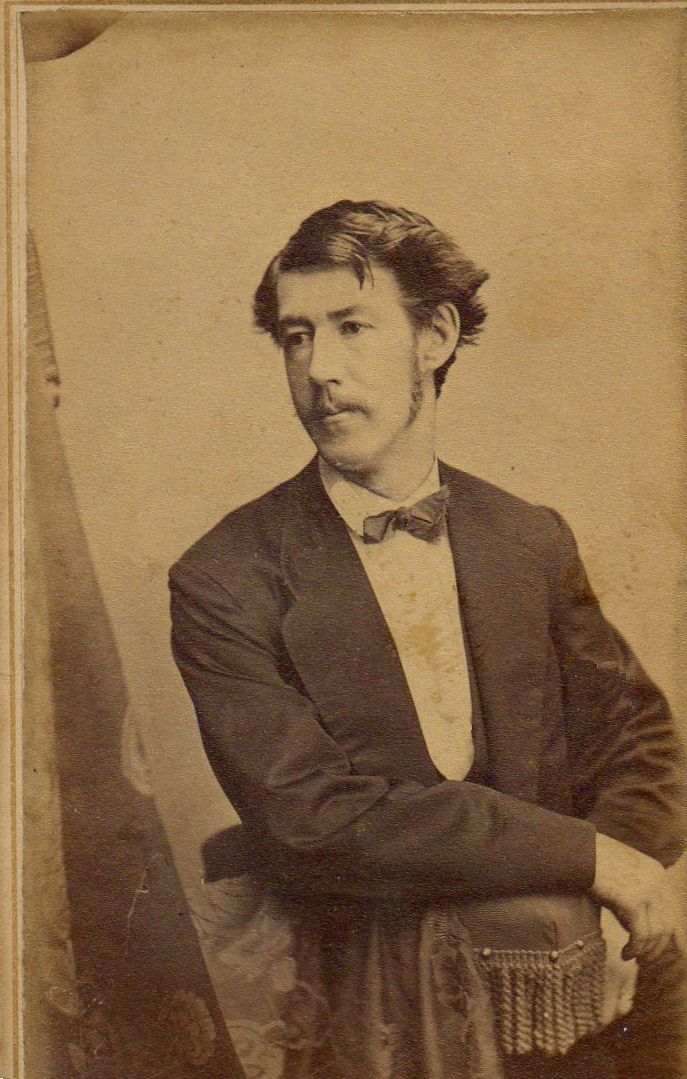
In his early years  Laroy Stickney was a Photographer by trade:


but in later years Laroy Stickney was a machinist for an automobile manufacturer.

Laroy Stickney

Laroy and Mattie were blessed with four children:  Ona A./Mrs. Albert H. Cooper  (1874-1925), Ida Elmira/Mrs. John F. Snyder (1877-1961), Peter LeGrand (1882-1934), and William Leopold (1884-1949).  There was mention of a fifth child who died young, but I was unable to find any information about them.

William L. Stickney makes his first appearance in the 1892 New York State Census:


The Stickney Family was living in the Town of Lenox, Madison County, New York where Leroy (sic) is listed as a photographer.

The 1900 US Census finds the Stickney Family living at 43 East Walnut in Oneida Village in the Town of Oneida, Madison County, New York.  That address no longer exists.  The family consisted of:  Laroy (54 years old), Martha (52), Peter (18), William (16), and niece Pearl Cross (8).  Laroy and Martha said they had been married for thirty years.  Martha said she had given birth to five children; four of whom were still alive in 1899.  Laroy gave his occupation as "photographer," and Peter as "Chair Finisher."  William and Pearl were "at School."  They could all both read and write.  They owned their home which was a house with a mortgage.  

There must have been problems in the Stickney family, because the 1903 Syracuse Directory shows William L. Stickney living with his father and brother Peter at 110 Lincoln Avenue in Syracuse:

110 Lincoln Avenue, Syracuse, New York

William is listed as a "Student."                    

The 1905 Syracuse Directory shows William L. Stickney living with his father and his brother Peter at 311 Tully in Syracuse.  William is listed as a "Clerk."  Modern townhouses occupy that lot today.

William Stickney began his business career in 1906 as a clerk with the H. H. Franklin Manufacturing Company in Syracuse which made, among other things, Franklin automobiles.

H. H. Franklin Automobile Works, Syracuse, NY

William Stickney's first mentions in a newspaper do not have to do with business, they have to do with his standing as a member of the Elks - or as they are more formally known "The Benevolent and Protective Order of Elks."  The Elks is a fraternal organization focusing on Community, Friendship and Charity.  Throughout 1906-1909 every mention of Stickney in the Syracuse newspaper has to do with his activities with the Elks. 

The Syracuse Herald-Journal of December 29, 1907 reported that Stickney was traveling to Buffalo, New York to install a modern office system for the Huber Credit Register Company.

By 1908 the Syracuse City Directory reported that William L. Stickney had "Removed to Indianapolis, Indiana."

The 1909 City Directory for Indianapolis shows Stickney living at 636 East 21st Street:

636-640 E. 21st Street, Indianapolis, Indiana

He had a job as a Salesman for the Smith Premier Typewriter Company in Indianapolis:


By the time of the 1910 US Census, the Laroy Stickney family had fallen apart.  Laroy was separated from Martha and was living with his daughter Ona Stickney Cooper and her family in Syracuse.  I was unable to locate Martha in the 1910 Census.  But the final blow fell in 1911 when Laroy Stickney was declared "Destitute" and sent to the Onondaga County Almshouse:

Onondaga County, NY Almshouse/Poorhouse

 Here is his admission record:


Interesting to note that he was not there due to alcoholism, but destitution.

In early 1910 as his family was falling apart around him, William Stickney was still selling typewriters but was now living at 2008 Park Avenue in Indianapolis:

2008 Park Avenue, Indianapolis, Indiana


Don't let the photo fool you - the house has five bedrooms.

On July 22, 1910 the Syracuse Post-Standard reported that William Stickney was returning to Syracuse:


and was now employed with the American Multigraph Sales Company of Cleveland.  

The 1911 Syracuse Directory showed William Stickney living at 214 Grace in Syracuse.  214 Grace is a vacant lot today.

William Stickney found time as he was traveling back and forth from Indianapolis to Syracuse to swing by Villa Grove, Douglas County, Illinois where he married Miss Agnes Y. Haddow (1879-1952) on June 14, 1911.

Mattoon (IL) Commercial Star - May 6, 1911

The couple met when both were working in Indianapolis.  The groom was twenty-seven; the bride was thirty-one.

Agnes Yule Haddow was born in 1880 in Glasgow, Scotland to Thomas Haddow (1846-1910) and Agnes Cockburn (1852-1948).  Thomas and Agnes Haddow had 10 children:  Thomas Burns (1875-1921), James K. (1878-1933), Agnes Yule/Mrs. William Stickney (1879-1952), Robert Coburn (1882-1948), John B. (1885-1953), twins Kirkwood A. (1887-1963), and Harry Cockburn (1887-1967), Marion Kirkwood/Mrs. Laurence S. Fall (1889-1964), William "Willie" (1892-1909), and Harriet "Hattie" Cockburn/Mrs. Arthur M. Jackson (1896-1991).  The Haddow Family came to the United States from Scotland in 1880.  Thomas Haddow was a Miner by trade.

Upon William Stickney's return to Syracuse he also returned to the Elks.  If he was involved with the Elks when he was living in Indianapolis it never made the newspapers.  

The newlyweds moved back to Indianapolis in 1913 - to 2303 N. Capitol Avenue:

2303 N. Capitol Avenue, Indianapolis, Indiana

William and Agnes Stickney were blessed with a son, William Leopold Stickney, Jr. (1913-2003) on August 2, 1913 in Indianapolis, Indiana.


William Stickney's father Laroy Stickney died June 22, 1915 in Syracuse.  He was sixty-nine years old.  He was buried in Woodlawn Cemetery in Syracuse:


Here is his obituary from the Syracuse (NY) Journal from June 22, 1915:

AGED RESIDENT DIES

Le Roy (sic) Stickney Was Stricken Last Night.

Leroy Stickney, 65, died suddenly early this morning at his home, No. 141 Dickerson street. Mr. Stickney collapsed last evening while standing on the porch of his home. He fell down the steps. He was carried into the house and seemed to recover. This morning he became seriously ill. Dr. John A. Belch was called but the man died a short time after he arrived. The case was referred to Coroner Crane, who ordered an autopsy. The body was removed to the County morgue by Herbert F. Lozott, superintendent. It is believed that death was due to heart disease and apoplexy. He leaves a brother and two sons.

He actually left three daughters and two sons - and his wife was still alive as well.  If he died at home as reported, he must have been released from the Onondaga County Almshouse, perhaps due to ill health.

William L. Stickney registered for the Draft on September 12, 1918.  He reported that he was living at 952 Downer Avenue in Milwaukee.  That number no longer exists on Downer.  He said he was a "Resident Manager for the Remington Typewriter Company."  The Registrar said Stickney was "Tall, Medium Build, with Brown Hair and Brown Eyes, and no physical issues that would prevent him from serving." 

By the time of the 1920 US Census on January 19, 1920, the Stickneys had moved again - this time to 395 Calvert Avenue in Detroit.  That address no longer exists on Calvert.  The family consisted of:  William L. Stickney (35 years old), Agnes Y. (39), William (6), mother Martha Stickney (71 and a widow), and brother Robert Haddow (36).  They could all read,  write and speak English and Young William attended school.  William the Dad listed his job as "Manager of a Typewriting Company," and Robert "machinist at an auto factory."  

By April, 1922 William Stickney and family are now living in Chicago as reported by the Indianapolis Star from April 15, 1922:


William's mother Martha O'Neill Stickney died in Chicago on December 28, 1922.  She was seventy-four years old.  She was buried next to her ex-husband in Woodland Cemetery in Syracuse:


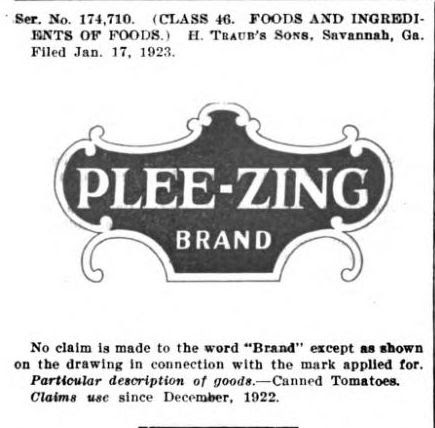
Even though William L. Stickney was often listed as the founder of grocery wholesaler Plee-Zing, Inc. that is not the case.  The trademark "Plee-Zing Brands" was filed January 27, 1923 by H. Traub's Sons:


A small group of independent grocers and one wholesaler had gotten together in Georgia with a plan to distribute canned and bottled foods from manufacturers to Plee-Zing, Inc. to wholesaler to retail grocer.  This was a new concept at a time when 54 to 56% of the nation's food business was handled by independent grocers.  Plee-Zing operated as a broker, obtaining its income through commissions from the manufacturers without added cost to the consumers.

These retailers in the south had found that they could not compete successfully with the chain stores by handling the same brands of goods, since the chains, controlling their sources could undersell the "little" man.  But by banding together, they hoped to develop a quality line, packed by various manufacturers throughout the country who, with an assured market, could sell at prices a little lower than those of nationally advertised brands.     

To do this effectively the stores needed goods with a label which would identify the product as a brand that meant quality and which could never be purchased in a chain store.  A single label would also give the grocer a feature line which would simplify and direct his selling efforts.  The name Plee-Zing was chosen because it is catchy, is easy to say and easy to remember.  They called Their distribution process a "Scientific Merchandising Service."

This mention was in the Porter, OK News of June 5, 1924:


As early as 1924 the Plee-zing Grocery Distribution Service existed in New York, Illinois, Pennsylvania and Maryland as illustrated by this full-page ad from the Evening Sun from October 24, 1924:


Here's another ad introducing the Plee-Zing concept:

The Hanover (PA) Evening Sun - 05 Dec 1924


The plan caught on so well in the south, notably in Georgia and Florida, that within a few years it got too big for the originators to handle.  Independent grocers and major wholesalers over the country wanted to get in on the deal.  

Consequently, representatives of the group went to New York in 1927 to find financing and personnel to take the concept nationwide.  They interested two men, George W. Simmons, of the Simmons hardware family, and William L. Stickney, who by this time was sales manager of the McKesson and Robbins drug firm.  

The two men took over the organization for the purpose of developing it on a nation-wide scale.  Their first innovations towards this end were to license food canners and manufacturers to pack under the Plee-Zing label and to state the source of supply on the label.  Plee-Zing was the only food label in the country that did this.  In addition, the label also carried a customer satisfaction guarantee.  Using their experience and expertise, Simmons and Stickney were able to take their Plee-Zing system nationwide in 1927.

The corporation established headquarters in New York with Mr. Simmons as President and Mr. Stickney as Vice President.  

In 1929 the company moved to St. Louis.  By that time, Plee-Zing had licensed more than 100 food manufacturers and had appointed 80-90 distributors in 30 states.

The first time William Stickney is mentioned in connection with groceries at all is in this article from the Allentown (PA) Morning Call from February 4, 1930:  


According to this article Stickney was vice president and general manager of the Simmons Corporation, St. Louis, which headed the Plee-Zing Service.

George W. Simmons died suddenly on May 21, 1930 during a polo match.  Here is his obituary from the St. Louis Post-Dispatch from May 22, 1930:


George W. Simmons


He was buried in Bellfontaine Cemetery in St. Louis


Upon Mr. Simmons' death, William Stickney became President and took over complete management of Plee-Zing, Inc.  

The 1930 US Census enumerator visited the Stickney Family on April 10, 1930.  They were living in Clayton, St. Louis County, Missouri, at 199 Shirley Drive.  That number no longer exists on Shirley Drive in Clayton.  The family consisted of:  William L. (46 years old), Agnes Y. (48), William L. Jr. (16) and Mother-in-Law Agnes Haddon (76).  They rented their house, for which they paid $135 per month rent.  William lists his occupation as "Sales-Manager Wholesale Groceries." 

Before there was Sky-Maid Coffee mentioned at the beginning of this article, there was Plee-Zing Coffee with the patented Plee-Zing trademark:


By 1933 the operations had grown to such proportions that a more central location seemed desirable.  Stickney chose Chicago, because more than 30 of  the firm's suppliers were in the city and suburbs, and with the direction of the company from Chicago the whole business could be expedited.

Through the years, merchandising service and distribution increased until 130 manufacturers were producing for the Plee-Zing label, and the scope of the business had spread to 38 states (all but the far west).  Plee-Zing became known as one of the leading national organizations which catered to independent grocers.  

Plee-Zing tried to be as comprehensive a supplier as possible - even offering cigars:


 and 45 r.p.m. records:


The 1940 US Census shows "empty-nesters" William and Agnes Stickney living in Chicago's 49th Ward - at 7714 North Eastlake Terrace:

7714 N. Eastlake Terrace, Chicago

The family consisted of William L. Stickney (57 years old), and wife Agnes Y. (59).  They said they had both gone as far as the second year of college in their education.  They lived in the same place in 1935.  The rented their apartment for $110.00/month ($2,500.00 in today's funds).  William said he was the "Proprietor/Manager of a Wholesale Grocery."  He worked all 52 weeks of the previous year, and earned $5,000.00 ($110,000.00 in today's funds).  

When he registered for the Draft on April 27, 1942 he reported that his employer Plee-Zing, Inc. was located at 176 W. Adams in Chicago.  That building is now the W Hotel.  The Registrar described Stickney as White, 5' 10", 190 lbs., Brown Eyes, Brown Hair, Light Complexion, and he wore glasses.

By 1948 the company had grown to the point that it could no longer function economically in Chicago's Loop.  Turning to the suburbs because of further planned expansion, the company found a suitable building at 2544 Green Bay Road in Evanston.  It was the former Central State Bank and Trust Company that had gone down in the Stock Market Crash of 1929.  The building had been vacant for some time when Plee-Zing bought the building and remodeled it throughout.  Today the site is occupied by a Chase Bank branch. 


The Chicago Tribune reported that Plee-Zing had bought the building at 2544 Green Bay Road, but the Evanston Review said they had only taken a long-term lease on it:

Evanston Review 9 Sep 1948

Some time between 1942 and 1949, William Stickney bought a house - at 911 Drake Road in Glenview, Illinois:

911 Drake Road, Glenview, Illinois


William L. Stickney died on June 12, 1949.  He was sixty-five years old.  Here is his obituary and Death Notice from the Chicago Tribune of June 14, 1949:


He was buried in Memorial Park Cemetery, Skokie, Illinois:


On August 5, 1949, the Arlington Heights (IL) Herald reported about the size of Stickney's estate:


A $100,000 estate in 1949 equates to approx. $1.3 million today.

May William L. Stickney who revolutionized distribution for independent grocers nationwide, rest in peace.


The rest of the story:  After the death of William Stickney, Plee-Zing was run by George B. Watt as President, and William L. Stickney, Jr. - first as Vice President and eventually as President.  The company continued to grow and thrive and upon the retirement of William L. Stickney, Jr. the position of President was filled by William L. Stickney, III. 

In 2004, Plee-Zing, Inc. was sold to Progressive Group Alliance of Richmond, Virginia.  The announcement of the sale reported that the addition of Plee-Zing would add some 160 distributor locations to the Progressive Group Alliance portfolio, bringing customer reach to almost 1,000 distributor locations that had combined sales exceeding $20 billion.

Agnes Yule Stickney died in 1952 at the age of 72.  She is buried next to her husband in Memorial Park Cemetery in Skokie:


William L. Stickney, Jr. died in 2003 at the age of 90.  His cremains are interred in the Saint Paul's Episcopal Church Columbarium in Delray Beach, Florida:


William L. Stickney, III died in 2019 at the age of 81.  He is buried in Sacred Heart Cemetery, Northbrook, Illinois:


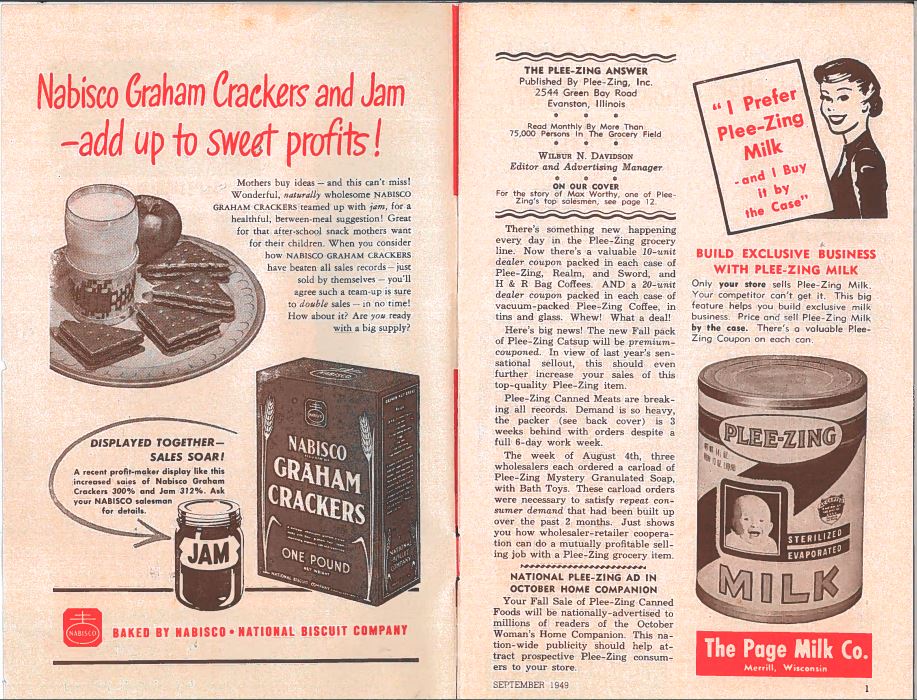
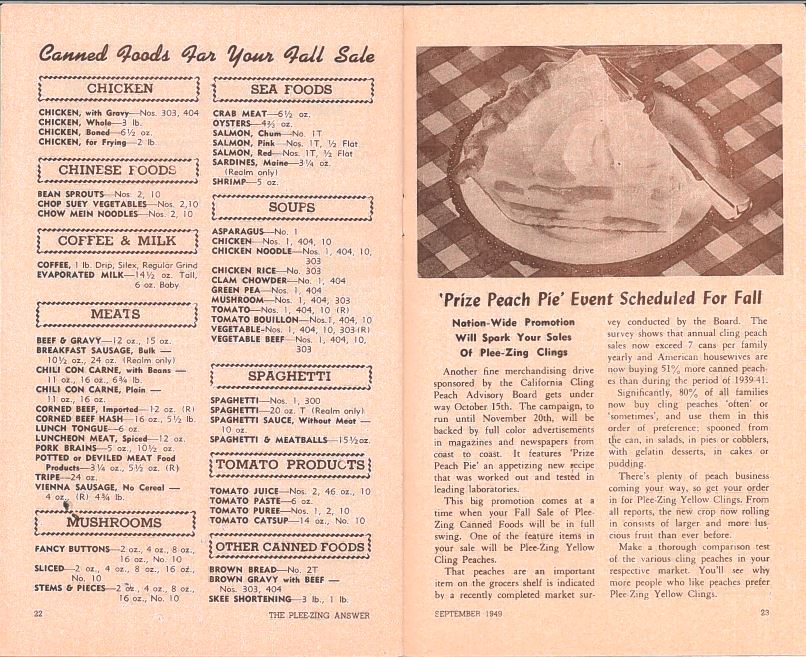
After I had finished writing this article I happened to find a copy of The Plee-Zing Answer Magazine, the house organ for Plee-Zing, Inc.  It was dated September, 1949, just one month after William Stickney's death in August, 1949.  For the first time, G.B. Watt gives a message as President instead of Stickney, and refers to the upcoming convention in Chicago - the first without William Stickney.  Stickney is not referred to in this issue at all, but his memory surely affected everyone reading it,  I think you will enjoy reading the magazine which will enable you to see just how comprehensive a company Plee-Zing was.


A 2 lb. unopened can of Sky Maid Coffee 


Sunday, September 1, 2024

FROM YOUR S. S. TEACHER - to Helen Hill from Theckla L. Hintz

In this blog over the last two months I told the wild stories of merchant W.B. Daniels and his two wives, Elizabeth Cooke Daniels and Lillian Beardslee Smith Abbott Daniels Chuna.  This month I decided to tell the story of two women whose lives were considerably more tame, Theckla L. Hintz and Helen Hill. 

Where did I first encounter Teckla Hintz and Helen Hill?  On a postcard for sale on ebay.  I have mentioned in the past that I check ebay daily for unusual or interesting material from my home town, Evanston, Illinois.  Recently this postcard was posted on ebay:


The postcard is postmarked January 20, 1905 and pictures Fountain Square in Evanston.  It was sent to Miss Helen Hill of Highland Park, Illinois.  The sender was Theckla L. Hintz.  Here's what the card says:

January 18, 1905

My Dear Helen:
            
            This is a view of three central streets in Evanston.  The building I have marked a cross on is the City Hall.  

I hope you are well.  Lovingly, 

        Your S.S. Teacher, Theckla L. Hintz


So, what can we dig up about S.S. Teacher Theckla L. Hintz and her student, Helen Hill?

Theckla Louise Hintz was born July 7, 1886 in Deerfield, Illinois to Peter Hintz (1830-1912) and Emma Deitrich (1855-1921).  

Some sources say that Peter Hintz was born in Denmark, others in Schleswig-Holstein.  He came to the US in 1855.  His first marriage was in 1856 to Magdalena Lena Whittmer (1824–1884).  Six children were born to this marriage:  Edward Jacob Hintz (1858–1938), Adolph Detleff Hintz (1861–1935), Harriet (Hattie) Hintz/Mrs. William Noerenberg (1863–1913), Eugene Peter Hintz (1865–1942), Frank W. Hintz (1869–1948) and Franklin Robert Hintz (1878–1890).  Peter Hintz was a carpenter by trade.

Magdalena Hintz died in 1884.  Peter remarried September 2, 1886 to Emma Deitrich (1855-1921) probably in Lake County, Illinois.  Peter and Emma had three children:  Theckla Louise/Mrs. Roscoe Burgess (1887-1960), Wilhelm (1889-1949), and another child, Charley who died as an infant in 1887.  Whether or not he was a twin of Theckla is unknown.

Theckla makes her first appearance in the 1900 US Census.  The Peter Hintz family was living at 61 Second Street in Highland Park, Illinois, an address that does not exist today.  The family consisted of Peter Hintz (69 years old), his wife Emma (45), Theckla (12) and Wilhelm (11).  Peter and Emma reported that they had been married for 14 years, and Emma said she had given birth to two children, both of whom were alive in 1900.  Peter gave his occupation as "Carpenter." They owned their home free and clear, and it was not a farm.  Theckla and Wilhelm were "at school" and the entire family could both read and write. 

Also living with the Hintz family were Servant Sophia Bloom (28) a widow, and her son Joseph (5).  

Theckla Hintz sent the postcard featured above to Miss Helen Hill from Highland Park on January 18, 1905.  It was postmarked January 20, 1905.  At that time Theckla referred to herself as "your S.S. teacher" which we can assume stood for "your Sunday School teacher," or even "your Social Studies teacher."   

I could not locate any of the Hintz family in the 1910 US Census.

On September 28, 1910 Teckla Louise Hintz married Roscoe Miles Burgess (1877-1955).  The bride was twenty-three; the groom was thirty-three.  

Roscoe Miles Burgess was born May 7, 1877 in Liverpool, England to William Burgess (1843-1922) and Frances Anne Miles (1842-1896), one of ten children.  Roscoe's father was known throughout England and the US as an author, publicist, and life long foe of organized vice and its attendant social diseases.  Dr. Burgess attracted attention also through his books, "The Bible and Shakespeare," "The Religion of Ruskin," and "The World's Social Evil."  Dr. Burgess was also a Congregationalist minister.

Like his famous father, Roscoe Burgess was a Congregational Minister by trade.  Here is an article about the bride and groom from the Waukegan News-Sun of September 29, 1910:


We learn from this article that if Teckla Hintz was a teacher she was no longer teaching by 1910. Before her marriage she was the assistant postmistress in Highland Park.  If she had been a Sunday School teacher she may have continued doing that.  

Apparently some pre-wedding shenanigans took place with the groom as reported by the Waukegan Sun from October 3, 1910:


We also learned from the article that after the wedding, the newlyweds took up residence in Millington, Illinois, which in 1910 had a population of 223.

Theckla's father Peter Hintz died February 4, 1912 in Highland Park.  He was eighty-one years old.  He is buried in the North Northfield Cemetery in Northbrook:


Theckla and Roscoe Burgess were blessed with a son, Robert William Burgess, who was born in Chicago on November 19, 1912.

The 1920 US Census shows the Burgess family living in Somonauk Village, DeKalb County, Illinois.  As with many small towns, the homes were not numbered.  The Burgess family consisted of:  Roscoe (42 years old), Teckla (32), and Robert (7).  in addition there were three boarders who were all high school teachers:  Gertrude Hebbecker (24), Elsa Freeman (24) and Mabel Dundiddie (20).  Roscoe reported his occupation as a "Congregational Preacher."  Teckla did not list an occupation and Robert was "at school."  Roscoe said that he had been born in England, that he immigrated in 1882 and became a Naturalized Citizen in 1887. 

During this period, Roscoe Burgess was Pastor of the Union Congregational Church in Somonauk.

Theckla's mother, Emma Deitrich Hintz died November 11, 1921 in Highland Park, Illinois.  She was sixty-six years old.  Here is a photo of her with Theckla's son Rob:

Emma Hintz with her grandson Rob Burgess

She is buried in Forest Home Cemetery in Milwaukee, Wisconsin:


The 1930 US Census finds Theckla Burgess and her family living in Leepertown Township, Bureau County, Illinois.  The population was about 300, so again the houses were not numbered.  The Burgess family consisted of:  Roscoe (52 years old), Theckla (42), and Robert W. (17).  In addition Emma A. Schaefer (78) is living with them as a "Lodger/Companion."  Roscoe reported that he was a Clergyman in the Congregational Church, the rest reported no occupation.  The Burgess family said they lived in a house that they rented for $25.00 per month ($470.00 in today's funds).  Roscoe said he was born in England and became a Naturalized Citizen in 1882.  The rest were all born in the US. 

In 1931 Rev. Burgess accepted the position as pastor of the Peoria Heights Congregational Church in Peoria Heights, Illinois.  At that time Burgess and his wife relocated to 202 W. Rouse Street, Peoria Heights Village.  West Rouse Street no longer exists in Peoria Heights.

The 1940 US Census shows the Burgess family still living in the same place they were living in 1935.  The family now consists of empty-nesters Roscoe (62 years old) and Theckla (52).  Emma Shafer is still living with them - this time as just a Lodger.  Both Roscoe and Theckla reported that the highest level of education they achieved was four years of high school.  Obviously Roscoe did not take into account his training in the Congregationalist seminary.  Roscoe said he was "Preacher - Pastor of Church."  He said he worked 52 weeks in the previous year and earned $1,800.00 ($40,394 in today's funds).

In December of 1946, Rev. Roscoe Burgess resigned from the Peoria Heights Congregational Church to accept the job as pastor of the Providence Congregational Church in Bureau County, Illinois.  Roscoe and Theckla Burgess would be moving to Route 1, Tiskilwa, Illinois.  Here is the story from the Peoria Heights (IL) Herald from December 13, 1946:

 
Theckla's brother Wilhelm Hintz died May 18, 1949 in Waukegan, Illinois.  He had worked for the Chicago and North Western Railroad, and as a letter carrier for the US Postal Service.  He was sixty years old.  He is buried in the North Northfield Cemetery in Northbrook as was his father.   


The 1950 US Census shows Roscoe and Theckla Burgess now living in Tiskilwa, Bureau County, Illinois in the "1st home from the corner Block 3 going N."  Roscoe Burgess is now 72; Theckla is 63.  Roscoe had streamlined his occupation to "Preacher-Church."  He reported he had worked 50 hours the week before the census.  Theckla was reported as "Unable to Work."

Roscoe Burgess died October 27, 1955 in Moline Lutheran Hospital, Moline, Illinois.  He was 77 years old.  Here is his obituary from the Davenport (IA) Daily Times:


He was buried in the Greenwood Cemetery in Bureau, Illinois.  


Theckla Hintz Burgess died July 18, 1960 in the Bellwood Nursing Home, Chillicothe, Illinois.  She was 73 years old.  Here is her obituary from the Moline (IL) Dispatch of July 22, 1960:


She was buried next to her husband in the Greenwood Cemetery in Bureau:

Photo courtesy Find a Grave volunteer Har37x

Now we know all about the sender of the postcard in 1905 - let's see what we can "dig up" about the recipient:

Helen A. Hill was born in August of 1894 in Illinois to Alfred Hill (1859-1947) and Vendla Sanberg Hill (1868-1947).  Vendla's name was sometimes spelled "Wendla."  Both of Helen's parents had been born in Sweden.  Alfred came to the US in 1882 whereas Vendla immigrated in 1887.  They married in 1890 in Joliet.

Alfred Hill had several occupations through the years.  In 1900 he reported he was a "Coachman."  In 1910 he said he was a "Carpenter" who worked on houses.  He tried to get out of Jury Duty in 1913 because he said he owned a laundry and there would be no one else there if something went wrong with one of the machines.  In 1920 and 1930 he still owned the laundry.  By 1940 he was retired.

Alfred and Vendla had three children altogether:  Helen (1894-1971), George Oliver (1897-1925) and Ethel (sometimes spelled "Ethyl)/Mrs. Carl Bergstrom (1901-1948).  

The first time Helen Hill makes an appearance is in the 1900 US Census.  The Hills were living at #80 Second Street in Highland Park, Deerfield Township, Illinois.  You may remember that for the 1900 Census the Hintz family was living at #61 Second Street in Highland Park.  So the Hintz and Hill family were not just friends, they were also neighbors.  As was said for the Hintz family, that section of Second Street in Highland Park no longer exists.  The Hill family consisted of: Alfred Hill (41 years old), Wendla (32), Helen (5) and George (3).  Also living with them was brother-in-law August Solmonson (44).  August and Wendla said they had been married for ten years.  Wendla said she had given birth to two children and both were alive in 1900.  Alfred said he came to the United States in 1882 and was a Naturalized Citizen.  Wendla said she immigrated in  1887.  Both had come to the US from Sweden.  Alfred listed his occupation as "Coachman;" Helen was "at school."  Everyone except George could read and write.  They were, of course, all White.  Alfred reported that they lived in a House they owned with a Mortgage.    

Helen Hill probably received the postcard from Theckla Hintz the day it was postmarked, January 20, 1905.

The 1910 US Census finds the Hill family living at #53 Central Avenue (now Green Bay Road) in Highland Park.  The family consisted of  Alfred Hill (51 years old), Bendla (sic) 42, Helen (15), George (13), and Ethel (9).  In addition was brother-in-law August Sanberg (sic) 54, Cousin Helen Johnson (45) and Roomer Henry Lunn (18).  A house built in 1957 occupies that site today.  Alfred and Wendla said they had been married for nineteen years.  Wendla said she had given birth to three children and all were still alive in 1910.  Their immigration status was the same as had been reported in 1900.  Alfred said that he was a "Carpenter - House" but that he worked for someone else.  Wendla said she worked in a "Laundry - By the Day."  The children were, of course, at school.  Interestingly August Solmonson reported his occupation as "Delivers Laundry," and Helen Johnson was a "Laundress - By the Week."  The Hills owned their home free and clear. 

Remember, Theckla Hintz married in September of  1910 and moved with her husband to Millington, Illinois, so the paths of Theckla Hints and Helen Hill now diverged.     

The 1920 US Census for the Hill Family is very similar to 1910 Census except everyone in ten years older:  The Hill family was still living at #53 Green Bar Road in Highland Park.  The family consisted of  Alfred Hill (60 years old), Vendla 51, Helen (25), and Ethel (18).  George had moved out on his own.  In addition there was brother-in-law August Solmonson 64, Cousin Bretta Johnson (22) and Servant Anna Anderson (55).  Alfred now said that he was an "Owner-Laundry." and Anna Anderson in addition to be a Servant was also a Laundress.  The Hills still owned their home free and clear. 

Helen's brother George Oliver Hill died on January 9, 1925.  He was thirty years old.  Here is his Death Notice from January 11, 1925:


He is buried in Memorial Park Cemetery, Skokie, Illinois:


The 1930 US Census showed Helen Hill still living with her parents at 53 North Green Bay Road in Highland Park.  The family consisted of  Alfred Hill (71 years old), wife Vendla (62) and their daughter Helen (35).  This time around there were no non-family members living with the Hills.  They told the census taker that the owned their home, and it was worth $10,000.00 ($188,000.00 in today's funds).  They did own a radio.  Alfred said he was a "Washer-Laundry" Surprisingly thirty-five year old Helen did not report an occupation.   

There are some strange things happening on the 1940 US Census for Helen Hill and family.  They are still living in the same place in Highland Park, Illinois but instead of "53 N. Green Bay Road," it is now called "53 Central Avenue, the same thing it was called in the 1910 US Census.  What happened to Green Bay Road?  Not much because it was back for the 1950 Census.  But the street name is not the only unusual think to pop up on the 1940 US Census.  Helen's father is now called "Thomas" instead of "Alfred."  You can see where someone had erased the original entry and had written in "Thomas."   He is listed as 81 years old.  His wife "Vendela" (sic) is said to be 71.  Helen is listed as (45) which is correct.  "Thomas" and "Vendela" are both said to have gone as far as the eighth grade; Helen attended through the second year of High School.  None of the three of them list an occupation.  They all indicate they are "not" looking for work.  Helen indicates she does "other" work but earns no salary.  "Thomas" and Helen say they have "other" salaries.  All three were living in the same place in 1935.  However, the house they said was worth $10,000.00 in 1930 they said was now worth only $3,500.00 after the end of the Great Depression.

Helen's parents, Alfred and Vendla both died in March of 1947 - Vendla on March 4th and Alfred on March 25th.  Vendla was 78 years old; Alfred was 88.  Neither one had a Death Notice or Obituary in the newspaper that I could find.  Both are buried in Memorial Park Cemetery in Skokie, Illinois:


Helen's last surviving sibling Ethyl Hill Bergstrom died March 23, 1948 in Melrose Park, Illinois.  She was 47 years old.  Here is her Death Notice from the Chicago Tribune of March 25, 1948:


She is buried in Memorial Park Cemetery in Skokie - there is no Memorial Park Cemetery in Maywood.

Helen Hill died April 10, 1971 in Highland Park, Illinois.  She was seventy-six years old.  Here is her Death Notice from the Chicago Tribune from April 12, 1971:


Like her parents and siblings Helen was buried in Memorial Park Cemetery in Skokie:


So now you know the stories of an "S. S. Teacher" who sent a postcard to a student, friend and neighbor in 1905.  Although their lives started on similar paths, one married and then their paths diverged.  We don't know if they remained close after Theckla married, or even if they kept up contact at all.  Years ago when I started my family tree I was hoping to find someone who was famous (or even infamous) in my tree.  After years of research I found neither.  My relatives lived lives similar to Theckla Hintz and Helen Hill.  They grew up, went to school, some married and had children, some did not.  Some owned their businesses like Alfred Hill, some worked for others.  Some were clergy like Roscoe Burgess.  After the raucous  stories of W.B. Daniels over the past two months it was refreshing to tell the stories of people who were "just plain folks."

When Theckla Hintz sent that postcard to Helen Hill in 1905 she would have never guessed in a million years that someone would be writing about it 119 years later.

May Theckla Hintz Burgess, Helen Hill and their families rest in peace.